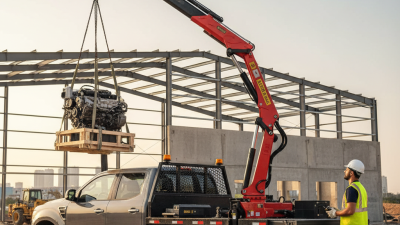
Choosing the right residential crane supplier can shape project safety, installation speed, and long-term operating costs. Global buyers often compare manufacturers by lifting capacity, customization, certifications, service coverage, and delivery reliability. China has become an important sourcing market for compact lifting equipment, especially for housing projects, prefabricated construction, and urban renovation.
This guide introduces ten Chinese residential crane suppliers with relevant manufacturing experience and international supply capabilities. Their product ranges may include tower cranes, small construction hoists, mini crawler cranes, and customized lifting systems. We examine practical details, such as load charts, maximum working radius, foundation requirements, control systems, spare-part access, and operator training. Factory audits, project references, inspection records, and responsive communication also matter. A polished website alone proves little.
Real purchasing decisions are rarely perfect. Some suppliers may offer attractive prices but limited overseas support. Others may provide stronger engineering services with longer production schedules. Specifications can also change after site measurements or local compliance reviews. Buyers should verify every claim directly and request current technical documents. This includes drawings, test reports, warranty terms, and installation guidance.
The goal is not to declare one universal winner. It is to help project owners, contractors, and distributors ask better questions. Each supplier should be judged against the building height, lifting frequency, site access, wind conditions, and regional regulations. Small details matter. A dependable residential crane should perform steadily on crowded sites, where millimeters, minutes, and maintenance decisions affect the entire construction schedule.

Residential cranes are compact lifting machines designed for house-building and renovation work. They move roof trusses, timber frames, concrete panels, glass, and mechanical equipment. Unlike large tower cranes, many residential models fit beside a driveway or inside a restricted building site. Their smaller footprint can reduce ground disturbance and simplify access.
These cranes are used for new homes, apartment extensions, roof replacement, and modular housing installation. A mobile crane may lift materials over a boundary wall, while a mini crawler crane can work on soft ground or inside a partially finished structure. In dense neighborhoods, low noise and precise positioning matter. The smallest-looking site can demand the most planning. Space matters. Load weight, working radius, ground strength, and overhead obstacles should be checked before operation. A crane that reaches the roof may not safely lift the required load at full extension.
Tips: Ask for verified load charts, inspection records, operator guidance, and maintenance details. Confirm transport dimensions before delivery. Use certified lifting accessories and establish a clear exclusion zone around the load. Weather can change the risk quickly, especially with glass panels or long timber sections. A professional assessment is wise, although smaller projects sometimes receive less attention than they deserve. That is a mistake worth reconsidering. Dry ground is not automatically stable, and a short lift is not automatically simple.

How China’s Top Residential Crane Suppliers Are Evaluated
China’s residential crane suppliers should be judged beyond price and lifting capacity. Grand View Research valued the global construction equipment market at about USD 241 billion in 2023. Its forecast suggests steady growth through 2030, increasing pressure on suppliers to prove reliability. For apartment projects, evaluators examine rated loads, maximum reach, wind limits, and lifting cycles. A clear load chart matters when steel beams pass above unfinished floors.
Factory evidence is equally important. Buyers should request welding inspection records, motor test results, brake certificates, and traceable component lists. ISO 9001 certification supports process control, but it does not guarantee field performance. Independent factory audits remain necessary. Small omissions happen. I have seen impressive brochures fail to explain emergency lowering procedures.
Safety data should guide the final decision. The International Labour Organization reports nearly three million work-related deaths annually, including occupational accidents and diseases. Crane selection cannot ignore operator visibility, overload protection, anti-collision systems, and maintenance access. Evaluators should compare conformity with applicable ISO, EN, and Chinese GB standards. They should also inspect installation manuals and service response times.
A reliable supplier provides tested prototypes, spare-parts schedules, training records, and documented warranty terms. Delivery history deserves evidence, not promises. Buyers can verify serial numbers, factory acceptance tests, and references from similar residential towers. Price still matters, but downtime, delayed handovers, and difficult repairs often cost more. The evaluation should include total ownership cost over ten years, even when the estimate feels imperfect.
This buyer-oriented evaluation model uses practical procurement criteria for residential construction cranes. Safety compliance receives the highest weighting, followed by lifting performance, durability, after-sales support, customization, delivery reliability, and total ownership cost. The percentages represent evaluation priorities rather than company-specific results.
China’s residential crane supply base is broad, but quality varies by application. The ten leading supplier profiles typically include manufacturers focused on tower cranes, compact hoists, crawler units, and smart monitoring systems. Some serve high-rise apartment projects, while others support smaller sites with narrow access roads. Their practical strengths include modular mast sections, variable-frequency drives, overload protection, and remote maintenance records.
Market data supports this demand. Fortune Business Insights valued the global tower crane market at about USD 7.67 billion in 2023 and forecasts continued growth through 2032. Mordor Intelligence also identifies Asia-Pacific as the largest regional market. These figures explain why Chinese suppliers increasingly offer export-ready documentation, multilingual manuals, and compliance testing for different jurisdictions.
The profiles also reveal important differences. Several suppliers provide lifting capacities above 10 tonnes, while compact models prioritize low headroom and quick assembly. Service quality remains uneven. Spare-part access can matter more than a lower purchase price. Buyers should verify factory testing, wind-load calculations, operator training, and response times before signing contracts. ISO certification helps, but it does not replace project references or third-party inspection. A few suppliers still present unclear energy-use data. That deserves scrutiny.
China Top 10 Residential Crane Suppliers for Global Buyers
Comparing ten Chinese residential crane suppliers requires more than reviewing catalog photos. Fortune Business Insights valued the global tower crane market at about USD 7.65 billion in 2023. Its 2024 report projects continued growth through 2032. This expansion increases product choice, but also creates uneven quality. Compare lifting capacity, maximum height, jib length, duty class, noise control, and installation space. For residential projects, compact bases and precise load movement often matter more than headline capacity.
Certificates need careful checking. Look for ISO 9001 quality systems, ISO 14001 environmental management, and applicable CE or EN documentation. EN 14439 is relevant to tower crane safety requirements in many European projects. Ask for serial-numbered test reports, welding records, load-test videos, and independent inspection results. A certificate scan is not enough. I would also verify whether the document covers the exact model, not merely the factory. Small details matter.
Prices vary widely with capacity, mast height, controls, and shipping terms. Market quotations commonly place standard construction cranes between roughly USD 80,000 and USD 300,000 before freight, installation, and taxes. Treat this range as indicative, not absolute. Export service should include drawings, spare parts, remote commissioning, packing photos, and clear Incoterms. Confirm lead times in writing. Some suppliers respond quickly, yet after-sales support becomes less certain after delivery. That weakness deserves honest attention. A lower quotation may become expensive when missing components delay a housing project.
China Top 10 Residential Crane Suppliers for Global Buyers
Selecting a residential crane supplier requires more than comparing prices. UN DESA projects that 68% of the world’s population will live in urban areas by 2050. This supports long-term housing demand, but local project conditions still decide the correct crane. Check maximum load, working radius, lifting height, wind limits, power supply, and installation space. A compact site may need a different solution from a high-rise project.
Ask each supplier for current load charts, material certificates, inspection records, and test procedures. Confirm compliance with applicable ISO, EN, or national standards. The ILO identifies construction as one of the world’s most hazardous industries, so safety documentation cannot be treated as paperwork. Request factory videos, third-party inspection options, and traceable component records. Ask how emergency repairs are handled. Response time matters.
Do not judge capability from a polished catalogue. Review at least three comparable installations and speak with previous buyers. Oxford Economics’ Global Construction 2030 research forecasts continued global construction growth, increasing pressure on equipment availability and service capacity. Negotiate spare-parts lists, operator training, warranty limits, delivery terms, and installation responsibilities in writing. A low quotation may hide expensive assembly delays. I would also test communication before signing; slow answers during purchasing often become slower answers during breakdowns. Supplier evaluation is never perfectly objective. Local regulations, weather, and site habits can change the decision.
A practical, brand-neutral comparison framework for evaluating Chinese suppliers of cranes used in residential construction projects.
| No. | Supplier Evaluation Dimension | Recommended Benchmark | Evidence Global Buyers Should Request | Why It Matters for Residential Projects | Suggested Purchase Action |
|---|---|---|---|---|---|
| 1 | Product Suitability | The supplier should offer the correct equipment category: tower crane, construction hoist, material hoist, or compact lifting equipment. | Product catalog, technical drawings, load charts, working-height data, and application references. | Residential sites often have restricted access, limited storage space, and changing lifting requirements. | Send the supplier a project brief before requesting a quotation. |
| 2 | Rated Load and Load Chart | The rated capacity, radius, and load chart must match the heaviest planned lift and the required working radius. | Signed load charts, capacity calculations, duty classification, and overload-protection details. | Concrete components, reinforcement materials, façade units, and prefabricated elements may require different lifting capacities. | Reject quotations that provide only a maximum load without radius-specific capacity information. |
| 3 | Compliance and Certification | Equipment should comply with the destination market’s legal requirements and applicable crane safety standards. | Declaration of conformity, test certificates, risk assessment, safety manuals, and applicable GB, EN, ISO, or local documents. | Non-compliant equipment can cause customs delays, site rejection, insurance issues, or unsafe operation. | Ask an independent inspection agency or local engineer to review the documents before payment. |
| 4 | Structural Design and Materials | The design should include traceable steel grades, weld procedures, structural calculations, and corrosion protection. | Material certificates, welding qualification records, non-destructive testing reports, and coating specifications. | Tower sections, masts, jib components, and connections directly affect stability and service life. | Include material traceability and inspection requirements in the purchase contract. |
| 5 | Electrical System and Voltage | Motor, control panel, protection devices, frequency, and voltage must be compatible with the destination site. | Electrical diagrams, component specifications, IP ratings, emergency-stop design, and factory test records. | Electrical incompatibility can lead to downtime, overheating, control faults, or difficult replacement sourcing. | Confirm the local power supply and spare-component availability before ordering. |
| 6 | Safety Protection | Essential protections should include limit switches, emergency stop, overload protection, anti-collision functions where applicable, and wind-speed monitoring where required. | Safety-system schematic, functional test procedure, alarm list, and commissioning checklist. | Urban residential work frequently takes place near workers, buildings, roads, and neighboring properties. | Make each safety function a mandatory acceptance-test item. |
| 7 | Factory Quality Control | The supplier should maintain documented incoming-material inspection, production inspection, final testing, and corrective-action procedures. | Quality manual, inspection plan, production photographs, audit report, and serial-number traceability. | Consistent quality reduces installation defects and unexpected commissioning delays. | Use a pre-shipment inspection covering dimensions, welds, electrical functions, and accessories. |
| 8 | Installation and Commissioning | The supplier should provide installation drawings, foundation or anchoring requirements, assembly procedures, and commissioning support. | Method statement, foundation loads, assembly sequence, technician qualifications, and commissioning report template. | Incorrect foundation, anchoring, or assembly can compromise stability even when the equipment itself is properly manufactured. | Clarify who is responsible for civil works, assembly, testing, and operator training. |
| 9 | After-Sales Service and Spare Parts | The supplier should provide technical support, spare-parts identification, troubleshooting guidance, and a defined response time. | Spare-parts list, recommended maintenance schedule, warranty terms, service contacts, and response-time commitment. | A small electrical or mechanical failure can stop an entire residential construction schedule. | Purchase critical wear parts and electrical components with the initial shipment. |
| 10 | Commercial Terms and Total Cost | Compare equipment price, export packing, freight, installation, training, spare parts, warranty, inspection, and lifecycle maintenance costs. | Itemized quotation, Incoterms, production lead time, payment schedule, warranty exclusions, and packed dimensions. | The lowest initial price may create higher costs through delays, missing accessories, difficult maintenance, or unsuitable specifications. | Evaluate at least three technically equivalent quotations using the same specification sheet. |
Note: Actual crane selection must be verified by a qualified engineer and approved according to the regulations applicable at the installation site. The benchmarks above are intended for supplier comparison and procurement planning, not as a substitute for project-specific engineering.