How to Choose the Best Hydraulic Pickup Crane for Your Needs?
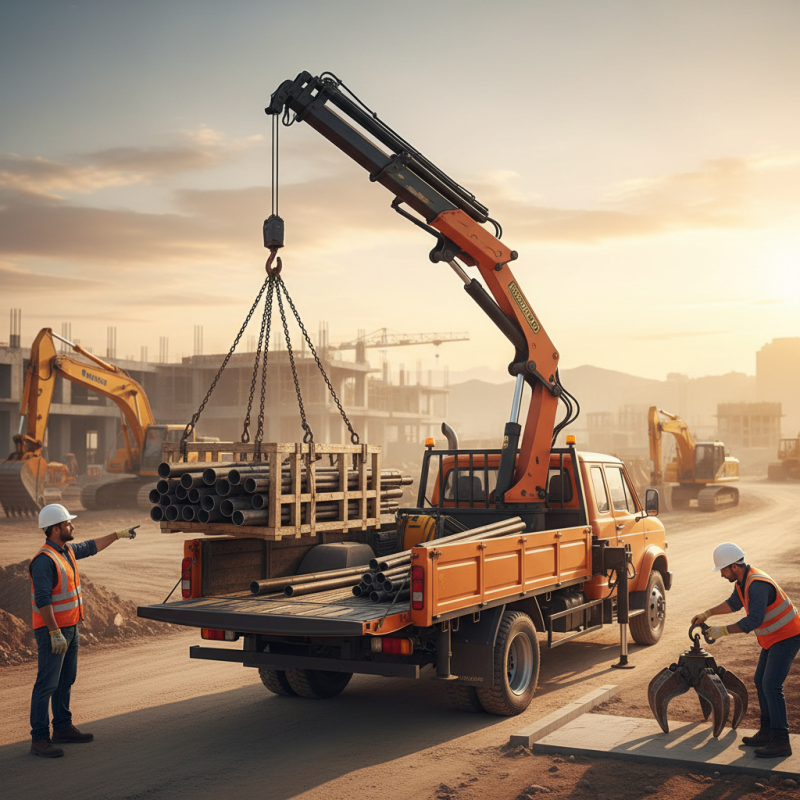
Choosing the best hydraulic pickup crane involves understanding various factors. These cranes are essential for heavy lifting tasks. They can efficiently transport materials in construction, agriculture, and logistics.
When selecting a hydraulic pickup crane, consideration of weight capacity is crucial. A crane that lifts too little can hinder operations. In contrast, an oversized crane may lead to unnecessary costs. Assess the typical loads you handle regularly. Matching these with the crane's specifications is vital.
Attachment compatibility is another detail worth considering. Various attachments can enhance a crane's versatility. However, not all cranes accommodate every attachment. Mismatching can lead to operational failures. Take time to evaluate different options. Realizing the perfect fit may take trial and error, but the right choice pays off in efficiency and safety.
Factors to Consider When Selecting a Hydraulic Pickup Crane for Your Application
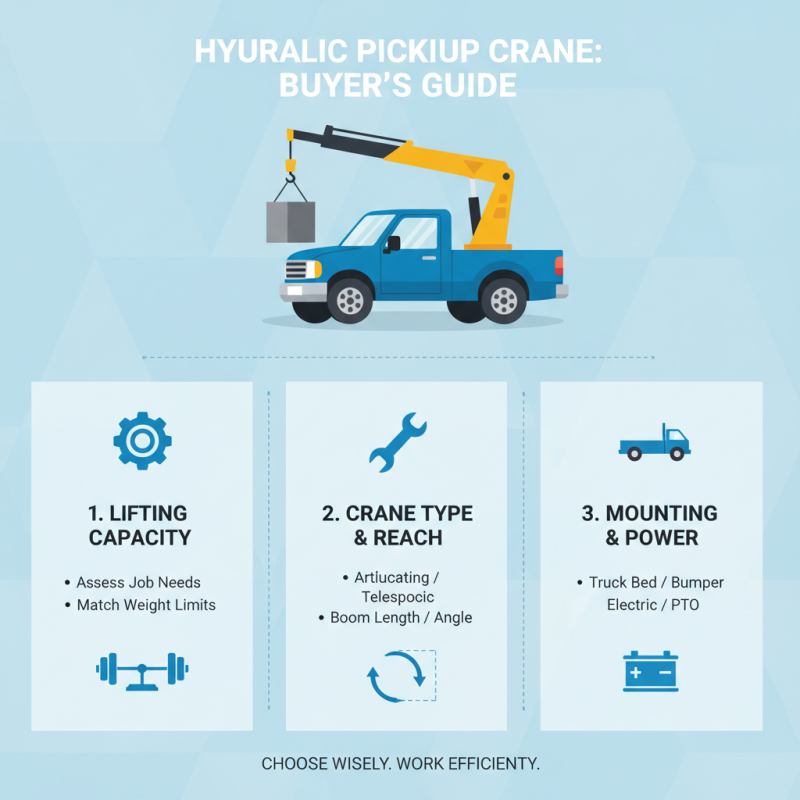
Choosing a hydraulic pickup crane requires careful thought. Firstly, assess your lifting capacity requirements. Different jobs need various weight limits. Understanding the specific demands of your tasks will guide your choice.
Next, consider the crane's reach and height. Does it fit your workspace? Some jobs may require long extensions. If your site has height restrictions, ensure the crane can be adjusted. It’s essential to visualize how the crane will operate in your environment.
Don’t overlook the hydraulic system's efficiency. An overpowered system can lead to unnecessary costs. Also, look for user-friendly controls. Complicated operations can lead to mistakes and accidents. It's better to invest in a crane that is safe and easy to use.
Understanding Load Capacity Requirements for Hydraulic Pickup Cranes
When selecting a hydraulic pickup crane, understanding load capacity is crucial. The load capacity defines how much weight the crane can lift safely. Each crane has a specific range, often marked in tons. It's vital to assess the types of loads you plan to handle. Are they heavy machinery, construction materials, or something lighter? Evaluating this helps narrow down your choices.
Many users overlook the importance of precise measurements. Ignoring the load's center of gravity can lead to unstable lifts. It’s common to hear stories of accidents due to miscalculations. Always, double-check the weights and dimensions. If you're unsure, consult a professional. Gathering accurate information is essential for safe operation.
In addition, consider your work environment. A tight job site may limit crane maneuverability. Similarly, soft ground can affect stability. Reflect on these factors when making your choice. It’s easy to get caught up in specs alone, but practical aspects matter too. Evaluate your project needs thoroughly. A thoughtless choice can lead to costly mistakes and safety hazards.
How to Choose the Best Hydraulic Pickup Crane for Your Needs? - Understanding Load Capacity Requirements for Hydraulic Pickup Cranes
| Model |
Load Capacity (lbs) |
Max Height (ft) |
Weight (lbs) |
Hydraulic Reach (ft) |
Price (USD) |
| Model A |
2000 |
14 |
800 |
10 |
4500 |
| Model B |
2500 |
16 |
850 |
12 |
5200 |
| Model C |
3000 |
18 |
900 |
14 |
6000 |
| Model D |
3500 |
20 |
950 |
15 |
6800 |
Evaluating Crane Reach and Lift Height for Optimal Performance
Choosing the right hydraulic pickup crane can be challenging. Evaluating crane reach and lift height is essential for its performance. Lift height generally ranges from 10 to 50 feet. Depending on your specific needs, analyzing this factor is crucial. Each inch of lift height affects your operational capabilities.
Understanding crane reach also plays a significant role. Most cranes offer a reach between 20 and 30 feet. This reach determines how far away the crane can operate while lifting loads. It impacts the efficiency of your job site. Data from industry reports indicate that cranes with a longer reach can significantly reduce the time on-site.
However, not every situation requires maximum reach and height. Sometimes, shorter lifts may suffice. Consider the work environment. If space is limited, a compact crane could be more beneficial. Balancing these aspects with the load capacity is vital. Frequent adjustments and re-evaluation are essential in choosing the right crane for ongoing projects.
Hydraulic Pickup Crane Performance Analysis
Assessing Hydraulic Crane Types: Fixed vs. Articulating Designs
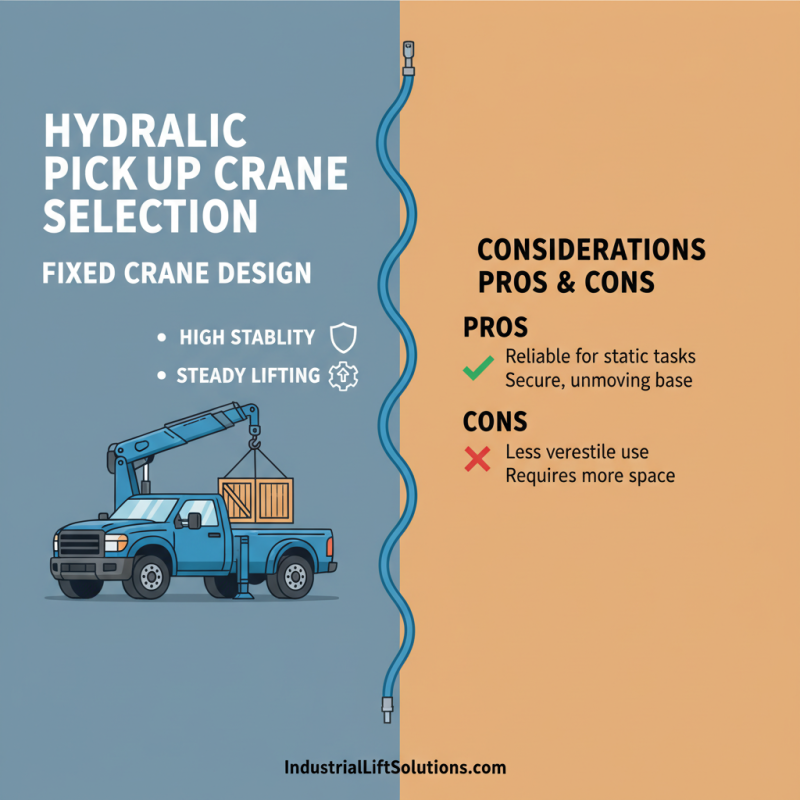
When selecting a hydraulic pickup crane, consider the type of design that suits your needs. Fixed cranes remain in a single position and provide high stability. They are ideal for tasks requiring a steady lifting force. However, they often need more space and are less versatile.
On the other hand, articulating cranes offer flexibility. They have jointed arms that allow for greater maneuverability. This design is useful in tight spaces or when the load needs to be lifted over obstacles. Articulating cranes can excel in dynamic environments but may lack the strength for heavier loads compared to fixed models.
Choosing between fixed and articulating designs depends on your specific situation. Assess the typical lifting scenarios you face. Identify the weight and size of loads, as well as the work environment. Each design has its pros and cons, and understanding these can prevent costly mistakes in the long run.
Maintenance and Safety Features to Look for in a Hydraulic Crane
When selecting a hydraulic pickup crane, maintenance and safety features should not be overlooked. These aspects play a crucial role in ensuring both efficiency and longevity. Check the maintenance schedule outlined by the manufacturer. Frequent inspections can help identify issues early. Pay attention to the ease of access for routine checks. This will save time and effort in the long run.
Safety features are essential. Look for cranes with overload protection systems. This minimizes the risk of accidents due to excessive weight. Inspect the controls and ensure they are intuitive and responsive. Emergency stops and alarms are also important for quick response in risky situations. Make sure the crane has safety certifications. This is a good indicator of reliability.
Consider the operating environment. Is it outdoors or indoors? Will it face harsh conditions? These factors can impact your crane's safety features. Regular training for operators is crucial. Even the best equipment can fail if not used properly. Reflecting on these points can help you make a better-informed decision.