How to Choose the Best Iowa Crane Supplier?

Choosing the best iowa crane supplier is not simply a price comparison. It is a decision about safety, uptime, documentation, and local response.

The American Rental Association’s 2024 forecast describes continued demand for construction equipment rentals. That demand increases pressure on suppliers to deliver dependable machines quickly. Meanwhile, OSHA’s Cranes and Derricks in Construction standard, 29 CFR Part 1926 Subpart CC, emphasizes qualified operators, inspections, and safe assembly. A reliable Iowa supplier should understand these requirements in practical terms. Ask for inspection records, operator training evidence, load charts, and maintenance histories. Do not accept vague promises.

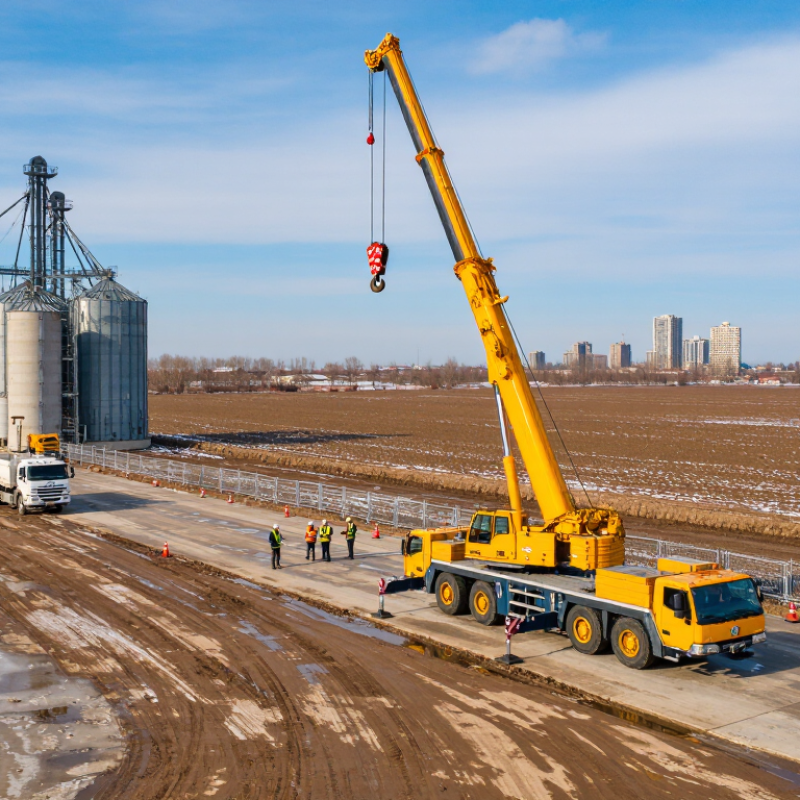
Local conditions matter. A crane working beside a grain facility faces different access limits than one serving a downtown Des Moines project. Iowa’s winter winds, frozen ground, narrow farm roads, and changing site surfaces can affect lift planning. The U.S. Bureau of Labor Statistics continues to identify construction as a high-risk industry, reinforcing the need for disciplined equipment selection and supervision. ASME B30.5 also provides recognized guidance for mobile and locomotive cranes.

Look beyond the newest paint.

Experience is visible in the details. Does the supplier inspect hydraulic lines before delivery? Can it provide a replacement plan after a breakdown? Does its team ask about soil bearing pressure, overhead obstructions, and lift radius before quoting? These questions separate a dependable partner from a basic equipment broker. Still, no supplier is perfect. Even strong companies can communicate poorly during busy seasons. A careful buyer should compare references, response times, certifications, and contract terms before signing.
How to Choose the Best Iowa Crane Supplier?

Define the Crane Type, Rated Capacity, Reach, and Iowa Job Conditions

How to Choose the Best Iowa Crane Supplier?

Define the Crane Type, Rated Capacity, Reach, and Iowa Job Conditions

Start with the load, not the crane brand. Define the crane type, maximum weight, lift frequency, and required reach. A 20-ton load at five meters differs greatly from the same load at 25 meters. Ask for a current load chart, not a verbal estimate. Confirm hook height, working radius, boom configuration, and ground pressure. The supplier should explain capacity reductions caused by radius, wind, attachments, and lifting angles.

Iowa conditions demand practical planning. NOAA’s 1991–2020 climate normals show Des Moines receives about 36 inches of annual precipitation and nearly 37 inches of snow. Mud, frost, and soft shoulders can quickly change a stable setup. OSHA’s construction fatality data recorded 1,075 deaths in 2023, showing why ground assessment and controlled lifting remain essential. Request documented inspections, operator qualifications, maintenance history, and a site-specific lift plan. Include overhead lines, narrow farm entrances, drainage areas, and winter access. A perfect paper plan can still miss a muddy access road.

Tips: Give the supplier a scaled site sketch and exact load details. Request an in-person site review for complex lifts. Compare total operating cost, not only hourly rates. Check communication speed, emergency service, and equipment age. If the supplier cannot explain capacity at full reach, keep asking. That gap matters.


How to Choose the Best Iowa Crane Supplier?

Define the crane type, rated capacity, reach, and Iowa job conditions before comparing suppliers. The chart shows representative planning values for common crane categories; actual lifting capacity depends on the load chart, boom length, radius, counterweight, setup, and site conditions.

Iowa projects may require additional review for soft or frozen ground, agricultural access roads, winter weather, wind exposure, overhead utilities, bridge restrictions, and limited staging space. Confirm the required lift radius and ground-bearing conditions with a qualified lift planner before selecting equipment.

Check ASME B30.5 Compliance and OSHA 29 CFR 1926.1402 Requirements

Choosing an Iowa crane supplier requires more than comparing rental prices. Ask how the supplier applies ASME B30.5 to mobile crane selection, inspection, operation, and maintenance. Request current inspection records, load charts, maintenance histories, and operator qualification details. These documents should match the exact crane arriving at your site.

Ground conditions deserve equal attention. OSHA 29 CFR 1926.1402 requires employers to provide ground that is firm, drained, and graded enough to support crane operations. Iowa construction sites may shift quickly after rain, frost, or thawing. A dependable supplier should review soil conditions, access routes, outrigger locations, and nearby trenches before mobilization. They should also identify suitable mats or blocking when the surface cannot safely carry the expected loads.

Walk the site with the supplier’s competent representative. Watch whether measurements are recorded or simply discussed. Ask who verifies setup, power-line clearances, swing radius, and communication procedures. The supplier should explain responsibilities clearly, because compliance cannot depend on assumptions.

Small details matter.

A useful supplier will raise concerns early, even when that delays delivery. Be cautious when someone promises any lift without reviewing the load radius and configuration. That confidence may sound helpful, but it can hide weak planning. I have seen schedules change after rain exposed soft ground; a rushed workaround would have created greater risk. Written planning, practical experience, and honest limits are stronger signs of reliability than a low quote.

Compare Monthly and Annual Inspection Records Required by OSHA 1926.1412

How to Choose the Best Iowa Crane Supplier?

A reliable Iowa crane supplier should explain inspection records before discussing price. OSHA 1926.1412 requires monthly crane inspections by a qualified person. Each report must identify the crane, inspection date, inspector, and discovered deficiencies. Monthly records must remain available for at least three months. Ask for blank samples and completed records, not verbal assurances.

Annual inspections are more extensive. They must occur at least every 12 months and examine structural, mechanical, operational, and safety components. Annual documentation must remain available for at least 12 months.

The supplier should show how defects receive written correction dates and responsible personnel. A missing signature may look minor, but it weakens traceability.

Look closely.

The Bureau of Labor Statistics reported 1,075 fatal work injuries in construction during 2023. That figure covers the whole sector, not cranes alone, yet it shows why inspection discipline matters. OSHA’s standard also requires more frequent inspections when service conditions, severe use, or environmental factors increase risk. An Iowa supplier familiar with winter ice, road salt, and changing jobsite surfaces should explain those triggers clearly. A clean spreadsheet can still hide poor field judgment. I would compare inspection dates against maintenance invoices, operator concerns, and actual crane hours. Records that appear perfect deserve questions too.

Evaluate Operator Credentials, Load Charts, Maintenance, and Safety Data

How to Choose the Best Iowa Crane Supplier?

Choosing an Iowa crane supplier requires more than comparing hourly rates. Ask for operator credentials, practical experience, and recent project references. Verify certifications and familiarity with changing ground conditions. An experienced operator should explain setup choices without hiding behind technical terms. Request references from completed projects, not only polished testimonials. Talk with the people who watched the lifts.

Load charts deserve careful, site-specific review. Confirm that each chart matches the crane configuration, boom length, counterweight, radius, and planned load. Include rigging weight, wind limits, and ground bearing pressure in the calculation. A lift may look safe on paper but fail after a small radius change. I once underestimated how quickly wet soil changed a setup. That mistake still shapes my checks. Good suppliers welcome questions and show their assumptions clearly.

Maintenance records reveal habits that sales conversations cannot. Look for dated inspections, repair histories, lubrication records, and documented corrective actions. Ask how defects are reported before equipment reaches your site. Review safety data beyond a single incident rate. Near-miss trends, toolbox talks, training hours, and response times show operational maturity. Missing data is a warning. It may reflect weak reporting or poor recordkeeping. Either way, ask for evidence, explain your site constraints, and note what remains uncertain.

How to Choose the Best Iowa Crane Supplier? - Evaluate Operator Credentials, Load Charts, Maintenance, and Safety Data

Evaluation Dimension Evidence to Request Relevant Requirement or Reference Recommended Acceptance Benchmark Suggested Weight
Operator Credentials Current crane operator certification, equipment type, capacity range, practical-exam record, and employer qualification files. OSHA 29 CFR 1926.1427 requires operators of covered construction cranes to be trained, certified or licensed, and evaluated as applicable. Credential matches the crane type and capacity; documentation is current; employer evaluation is completed and retained. 20%
Signal Person and Rigger Qualification Signal-person qualification records, rigging training, lift-director assignment, and documented communication method. OSHA 29 CFR 1926.1419–1926.1422 covers signals and signal-person qualification; OSHA 29 CFR 1926.1404 addresses assembly and disassembly responsibilities. Qualified personnel are assigned before mobilization; hand signals or radio procedures are defined in the lift plan. 10%
Load Charts and Configuration Control Manufacturer load charts, boom length, jib configuration, counterweight, outrigger position, operating radius, working height, and site elevation. OSHA 29 CFR 1926.1417 requires operators to follow manufacturer procedures and prohibitions; crane capacity must be determined from the applicable load chart. A configuration-specific chart is supplied; the planned load remains within rated capacity after deductions for rigging, attachments, and applicable capacity limits. 20%
Lift Planning and Engineering Review Written lift plan, load weight and center of gravity, ground-bearing analysis, swing radius, power-line survey, weather limits, and emergency controls. OSHA 29 CFR 1926.1408 addresses power-line safety; OSHA 29 CFR 1926.1412 addresses inspections; manufacturer instructions govern operating limits. Plan is reviewed by a competent or qualified person appropriate to the lift complexity and is approved before work begins. 15%
Inspection and Maintenance Program Daily or shift inspection forms, annual/comprehensive inspection records, corrective-action logs, preventive-maintenance schedule, and repair history. OSHA 29 CFR 1926.1412 requires documented inspections; OSHA 29 CFR 1926.1413 covers wire-rope inspections; manufacturer schedules remain applicable. No overdue inspections; deficiencies are documented, assigned, corrected, and verified before the crane returns to service. 15%
Safety Management and Incident Data Three-year OSHA recordable-injury summary, DART cases, crane incidents, near-miss reports, corrective actions, and current workers’ compensation information. OSHA Form 300A is used for annual recordable-injury summaries when reporting criteria apply; OSHA defines recordable cases and DART cases for safety reporting. Data is complete, internally consistent, and supported by corrective-action evidence; trends are reviewed rather than judged only by a single incident rate. 10%
Equipment Condition and Safety Devices Recent equipment photographs, inspection reports, rated-capacity limiter or indicator status, anti-two-block device, boom angle indicator, brakes, outriggers, and hook/latch condition. OSHA 29 CFR 1926.1415 lists required safety equipment and operational aids for covered cranes. Required devices are installed, functional, tested as required, and not bypassed; visible structural or mechanical defects are resolved before use. 5%
Insurance, Contracts, and Regulatory Readiness Certificate of insurance, workers’ compensation coverage, commercial general liability limits, subcontractor terms, permits, and responsibility matrix. Coverage limits and permits are contract- and site-specific; federal OSHA requirements may apply to Iowa construction operations. Coverage is verified directly with the insurer or broker; contract responsibilities for planning, operation, rigging, and damage are explicit. 5%
Total Evaluation Weight 100%
Scoring guidance: Rate each dimension from 0 to 5 based on the evidence provided. Multiply the rating by the suggested weight. Do not approve a supplier when required credentials, inspection records, load-chart documentation, or critical safety devices are missing or invalid.

Verify Iowa Licensing, Insurance, Service Response, and Total Rental Cost

How to Choose the Best Iowa Crane Supplier?

Before comparing prices, verify the supplier’s Iowa registration, operator qualifications, inspection records, and insurance certificates. Iowa may require different credentials depending on the work and equipment involved, so confirm details with the relevant state and local authorities. OSHA’s crane safety materials recorded 297 crane-related deaths between 2003 and 2008. That figure still matters on a muddy Iowa site. Request general liability, workers’ compensation, and equipment coverage limits in writing. Also ask who pays for damage, delays, or standby time.

Service response can decide whether a rental remains profitable. Ask for a named dispatcher, emergency contact, and realistic arrival window. A supplier promising “24-hour support” may only answer calls, not send a technician. Review inspection dates, maintenance logs, load charts, and replacement procedures. OSHA’s construction fatality data continues to show that struck-by hazards deserve serious attention. I would not accept verbal assurances alone. Paperwork can be incomplete, and experienced buyers still miss small exclusions.

Tips: Compare the total rental cost, not only the hourly rate. Include delivery, setup, fuel, operator fees, permits, overtime, standby hours, teardown, and possible weather delays. The EquipmentWatch Rental Rate Guide is useful for checking whether a quote fits regional market patterns, but it is only a benchmark. Measure the lift plan against the quote. A cheaper crane with slow response may cost more after one lost shift.