How to Choose Top Safety Crane Manufacturers in China?

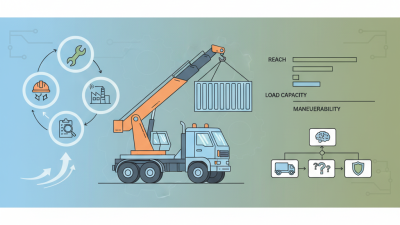
Choosing a top safety crane manufacturer in China is not just a price comparison. It is a decision about engineering quality, operator protection, and dependable support after delivery. A crane may look impressive in a showroom, yet its real value appears under load, on a busy site, and during routine maintenance.

Construction-safety researcher John A. Gambatese has advanced the principle of designing safety into construction work. A practical paraphrase for crane buyers is: “Build safety into the lift plan before the hook leaves the ground.” This is not a verbatim quotation. It reflects why safety features, clear documentation, and thoughtful engineering should be assessed together.

Look beyond polished brochures. Check how the manufacturer verifies rated capacity, braking systems, limit switches, emergency stops, and structural welds. Ask for inspection records, test procedures, component specifications, and maintenance guidance. Then confirm that the supplier can explain each document in plain language. Details matter.

A strong safety crane supplier should also discuss real operating conditions, including lift frequency, load shape, travel distance, and the work environment. Compare factory capability, quality controls, training, spare-parts access, and response times. If answers stay vague, pause. That hesitation may be useful.

No checklist removes every risk. Specifications can be misunderstood, and a factory visit cannot show every shift or service call. Still, careful questions help separate proven capability from confident marketing. This guide explains how to compare Chinese manufacturers with evidence, practical checks, and a clear focus on safe operation.
How to Choose Top Safety Crane Manufacturers in China?

Define Crane Requirements and Safety Standards

Before comparing crane manufacturers, define the job in measurable terms. Record the heaviest load, lifting height, span, travel distance, and expected operating hours per shift. Include the load’s shape and centre of gravity; a bulky steel frame may swing even when it is within the rated capacity. Note indoor or outdoor use, dust, moisture, temperature, and available power. Small details matter.

Then identify the safety requirements for the crane type and installation location. Ask which national regulations and recognized technical standards apply, and request documents showing how the proposed design meets them. Check rated-capacity limits, overload protection, emergency stops, limit switches, braking systems, and load charts. The control pendant should also suit the operator’s sightlines and working position. Do not rely on a generic certificate alone.

A useful specification gives every supplier the same basis for a comparable offer. Request layout drawings, component details, inspection and maintenance guidance, and a clear commissioning and load-test plan. Confirm who will verify installation conditions, such as runway alignment and supporting structure capacity. In practice, teams sometimes overlook future changes in load or duty cycle. Revisit those assumptions. A tidy checklist helps, but it cannot replace a site review by qualified personnel.

Verify Manufacturer Certifications and Compliance Records

Before comparing prices, ask each crane manufacturer for certificates that cover the exact equipment and factory you are evaluating. Check the certificate number, issuing organization, validity dates, and listed product scope. Then match the factory address and crane model against the quotation and technical drawings. A certificate for a different site or product offers little reassurance. Scope matters.

Request recent inspection and testing records, not just a polished certificate folder. Look for serial numbers, rated capacity, test dates, inspector details, and documented corrective actions. Compare these records with the crane’s nameplate and the inspection checklist. Where possible, confirm certificates directly with the issuing organization and clarify which safety standards apply to your destination and application. If records contain gaps, ask for an explanation in writing before placing an order. A missing page may be an honest filing mistake, but it still deserves attention. Paperwork can look convincing while saying little about daily factory practice, so consider an on-site or independent audit when the project warrants it. Good verification takes time. It can also reveal what a supplier has not yet organized well.

Assess Engineering Expertise and Manufacturing Quality

When evaluating crane manufacturers in China, look beyond a clean showroom. Ask engineers to explain how they size the bridge, trolley, brakes, and runway for your duty cycle. ISO 4301-1 classifies cranes by utilization and load spectrum, so the rating should reflect real lifting patterns—not just maximum capacity. Request calculation summaries, material traceability, weld inspection records, and calibrated test-equipment certificates. Small details matter. A serial number that links a beam to its inspection record is more useful than a polished brochure.

Manufacturing quality is visible on the shop floor. Check whether weld procedures are documented, inspectors are qualified, and non-destructive testing matches the risk and design. Ask to review documented proof-load procedures and how defects are corrected and recorded. The ILO’s 2023 global estimates report 2.93 million work-related deaths annually; this figure covers all industries, not cranes alone, but it underlines why safety evidence deserves scrutiny. A factory tour can still mislead. One visit is a thin sample, and tidy equipment does not prove consistent production. Compare records across several units, ask how design changes reach operators and service teams, and note any answer that relies on “we always do it this way.”

How to Choose Top Safety Crane Manufacturers in China?

Assess engineering expertise and manufacturing quality using documented, verifiable evidence.

The 1–5 ratings are an illustrative screening framework, not company scores or market-survey results. Request design calculations, load-test records, welding and material traceability documents, electrical safety checks, and inspection records when evaluating suppliers.

Compare Safety Systems, Testing, and Inspection Practices

How to Choose Top Safety Crane Manufacturers in China?
Compare Safety Systems, Testing, and Inspection Practices

A capable crane manufacturer should explain how each safety feature works, not merely list it. Ask about overload protection, emergency stops, travel limits, anti-collision devices, and safe access for maintenance. Check whether controls suit the site layout and operators’ working conditions. Request drawings and operating manuals that match the delivered configuration. Details matter.

Tips: Ask for a sample inspection record and a witnessed load-test procedure. Confirm who performs each check, what instruments are used, and how calibration is documented. Compare the records with the crane’s serial number and actual components. A neat form alone proves little. Ask directly.

Look for testing that covers more than a final demonstration. Review component checks, functional tests, and load-test results, including stated test conditions and acceptance criteria. Ask how defects are recorded, corrected, and retested. During a factory visit, observe an inspection if possible: listen for clear handover instructions and look for labeled limits, guards, and accessible emergency controls. A single visit cannot reveal everything. Follow up with references from comparable installations, and have a qualified local engineer review the technical file before purchase.

How to Choose Top Safety Crane Manufacturers in China? — Compare Safety Systems, Testing, and Inspection Practices

Evaluation dimension Suggested weight What to compare Evidence to request Strong indicators Warning signs
Design standards and risk assessment 15% Whether the crane design is matched to the intended duty, operating environment, load, and applicable regulations and standards. Design basis; risk assessment; duty classification; applicable standards with editions; drawings and calculations relevant to the supplied configuration. Requirements are documented and linked to the crane’s capacity, operating class, site conditions, and safety controls. Standards are identified by scope and edition. General claims of “international standard” compliance without identifying applicable standards, editions, or supporting documents.
Safety systems and protective devices 20% Presence, suitability, and functional behavior of devices such as overload protection, upper and lower travel limits, emergency stops, brakes, and anti-collision systems where needed. Safety-device list; electrical schematics; functional test procedures; risk-based explanation for devices included or omitted. Devices are selected for the crane and application, clearly documented, and tested for correct operation and safe response to faults. Safety devices are described only as optional accessories, or their function and test results cannot be demonstrated.
Manufacturing quality and component traceability 15% Inspection controls for structural fabrication, welding, machining, electrical assembly, and critical purchased components. Quality-control plan; material certificates where applicable; welding and inspection records; component specifications; serial-number traceability. Inspection records can be connected to the supplied crane, and nonconformities are recorded and resolved through a documented process. Missing production records, unclear component substitutions, or no traceability for critical parts.
Load and functional testing 15% Pre-shipment testing of lifting, travel, braking, limit devices, controls, and other safety functions. Factory acceptance test procedure and signed results; test equipment calibration records; test configuration and rated capacity; corrective-action records if applicable. Test scope and acceptance criteria follow the applicable requirements for the crane and are recorded against its identification and configuration. Only a verbal assurance or a generic test certificate is provided, with no clear test scope, results, or crane identification.
Inspection and maintenance guidance 15% Whether the manufacturer provides practical pre-use, periodic, and maintenance inspection guidance suited to the crane and its operating conditions. Operation and maintenance manuals; inspection checklists; recommended inspection intervals and maintenance tasks; spare-parts information. Guidance identifies inspection points, records to retain, and conditions requiring repair or removal from service. Inspection frequency is appropriate to use and applicable rules. Instructions are incomplete, generic, or do not explain how defects should be reported and addressed.
Third-party assessment and certification 10% Whether independent assessment is required for the project, destination, crane type, or applicable regulatory scheme—and whether the offered documentation covers the actual equipment. Relevant certificates and reports; issuing body and scope; model or serial-number coverage; any required inspection or conformity-assessment records. Documents are verifiable, current where required, and clearly applicable to the supplied crane and its intended market. A certificate is presented without a verifiable issuer, clear scope, or connection to the equipment being purchased.
Installation, commissioning, and operator support 5% Support for installation checks, commissioning, handover, and operator or maintenance training. Commissioning checklist; handover documents; training outline; site-readiness requirements; support and escalation process. Responsibilities are agreed in advance, and handover includes operating limits, safety functions, and required records. Installation and commissioning responsibilities are unclear, or training and handover documentation are unavailable.
After-sales service and corrective action 5% Availability of technical support, replacement parts, and a process for investigating faults or safety-related issues. Service contact process; parts list; warranty terms; response arrangements; sample corrective-action or service record with confidential details removed. Support routes, parts identification, and fault-reporting procedures are documented before delivery. Unclear warranty coverage, no identifiable technical support channel, or no process for addressing recurring faults.

Scoring note: Suggested weights are a procurement starting point, not a certification scheme. Confirm the latest applicable requirements for the crane type, installation site, and destination market. Standards such as ISO 9927 (crane inspections), ISO 4309 (wire-rope care and maintenance), ISO 12480-1 (safe use of cranes), and relevant national standards may apply depending on the equipment and project.

Review After-Sales Support and Select Qualified Manufacturers

After-sales support can determine whether a crane remains dependable after installation. Ask how quickly the manufacturer responds when a limit switch fails or a hoist makes an unusual noise. Request written service hours, escalation contacts, and expected spare-parts lead times. Ask whether technicians can guide your maintenance team remotely or visit the site. Get details in writing. A warranty alone is not a support plan; check what it excludes, who pays for travel, and how replacement parts are handled. Even a careful supplier may face delays, so a clear backup procedure matters.

To assess a manufacturer’s qualifications, review production records, inspection procedures, and relevant quality and safety documentation. Ask to see how components are traced from receipt through final assembly, and whether load-test results are recorded for each unit. A factory visit can reveal practical details: organized parts storage, calibrated testing equipment, and technicians who can explain their checks plainly. Speak with previous customers about response times after commissioning, not only product delivery. Sales promises sound reassuring. Evidence is better. I would still treat polished paperwork cautiously; it cannot show how a team behaves during a difficult repair. Compare service terms, technical expertise, and documented inspections before choosing a supplier.