Why Invest in Flotation Equipment for Your Mining Operation?
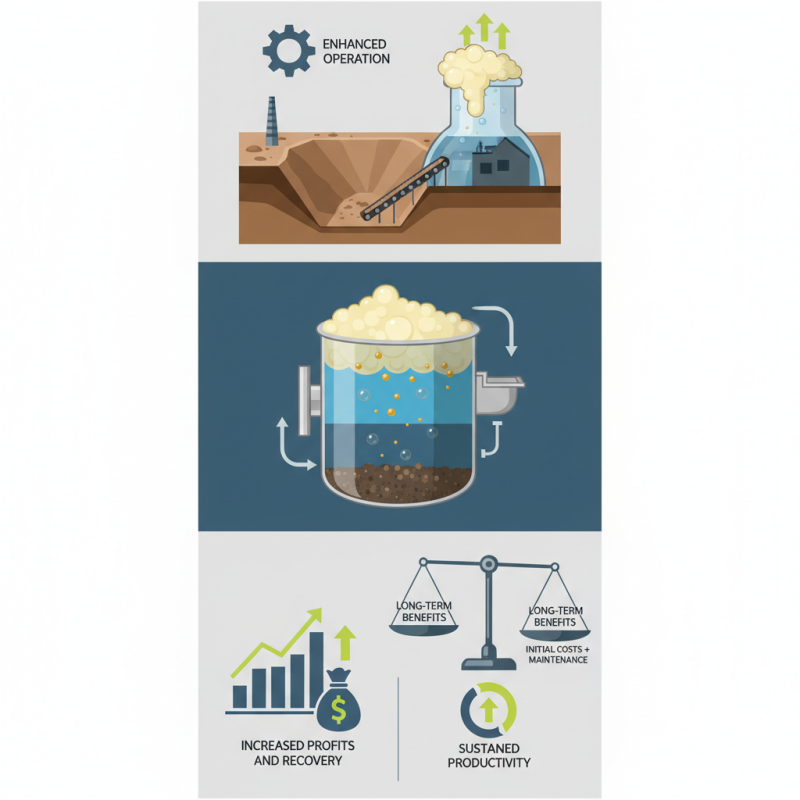
Investing in Flotation Equipment can significantly enhance your mining operation. This equipment plays a crucial role in mineral processing. It separates valuable minerals from waste.
Flotation Equipment works through a complex mechanism. Air bubbles attach to minerals, lifting them to the surface. This process improves recovery rates. With better recovery, profits can increase. Companies seeking efficiency benefit immensely from this investment.
However, some may underestimate the costs involved. Initial expenses for quality flotation systems can be high. There’s also maintenance to consider. Evaluating the long-term benefits versus immediate costs is essential. Investing wisely ensures sustained productivity in the competitive mining industry.
Importance of Flotation Equipment in Mining Operations
Flotation equipment plays a vital role in mining operations, particularly in the extraction of valuable minerals. It employs a process that increases the concentration of desired materials while removing impurities. This technique is especially pertinent for minerals like copper, nickel, and gold, where effective separation can significantly enhance recovery rates.
Investing in quality flotation equipment can result in improved operational efficiency. However, not all mining operations will benefit equally. Factors such as ore type, mineralogy, and operational scale must be considered. A thorough evaluation of these elements can prevent costly mistakes. Proper training for personnel operating these systems is equally critical. Untrained staff may lead to equipment misuse and suboptimal performance.
Choosing the right flotation system demands careful consideration. What works well in one context may not yield results in another. Continuous monitoring and adjustments often reflect the necessity of adaptability in operations. As technology evolves, staying updated with advancements in flotation methods will ensure long-term success in a competitive market.
Key Benefits of Investing in Flotation Technology
Investing in flotation technology is crucial for modern mining operations. This method enhances mineral recovery rates, ensuring that companies maximize their output. It operates by separating valuable minerals from impurities, which leads to more efficient processing. Improved recovery translates to better profits, making flotation equipment a sound financial decision.
The reliability of flotation systems plays a vital role in a mining operation's success. With specialized designs, these systems can handle varying ore types, which adds versatility to processing. Moreover, while flotation can be a costly initial investment, the long-term benefits often outweigh the risks. Enhanced recovery rates mean less waste and greater resource utilization, driving operational efficiency.
While flotation technology offers many advantages, implementation can present challenges. Operators must be trained to use the equipment effectively. Additionally, regular maintenance is necessary to avoid downtime. Being aware of these factors will lead to better outcomes. Recognizing potential pitfalls enables operators to make informed decisions, ultimately enhancing their mining process.
Types of Flotation Equipment and Their Applications
Flotation equipment plays a crucial role in mining operations. Various types of Flotation Machines are designed for specific applications. These include mechanical, column, and hybrid flotation cells. Mechanical flotation cells use agitators to introduce air into the slurry. This method is effective for a variety of ores and provides a good separation efficiency.
Column flotation is a more modern technique. It offers enhanced mineral recovery rates, particularly for fine particles. The design allows for better handling of low-grade ores. However, its complexity can lead to operational challenges. Hybrid flotation cells combine features from both mechanical and column types. They offer flexibility and increased recovery potential, but they may not always perform as expected under all conditions.
Investing in the right flotation equipment is essential. Each type has distinct advantages and limitations. Understanding these nuances helps operators make informed decisions. Not every application benefits from the latest technology. Some operations may find traditional methods more reliable. Analyzing the specific needs of your operation is vital for achieving optimal results.
Investment in Flotation Equipment by Type in Mining Operations
This chart illustrates the investment distribution across different types of flotation equipment commonly used in mining operations. The focus is on how these investments vary based on their applications in mineral processing.
Cost Considerations and Returns on Investment
Investing in flotation equipment for mining operations can be a game-changer. Understanding the cost considerations is essential. Initial expenses may seem high, but they often pay off over time. Efficient flotation systems improve mineral recovery rates significantly. This means more profit from the same amount of raw material processed. Companies should carefully evaluate their unique needs against the costs of various equipment.
Potential returns on investment can be substantial. When flotation processes are optimized, operational efficiency increases. This can lead to reduced energy and labor costs. Enhanced productivity can also translate into greater output without needing to scale up operations. However, maintenance costs cannot be overlooked. Regular upkeep ensures equipment runs smoothly, preventing unexpected breakdowns that could halt production.
The decision to invest should consider long-term benefits versus short-term expenses. Analyzing specific operation needs and market fluctuations can provide clarity. Flotation equipment should align with overall business strategies. This requires a thorough assessment of cash flow, potential growth, and recovery rates. Consistent evaluation and adjustments can ultimately maximize returns on investment.
Future Trends in Flotation Equipment for Mining Industry
The mining industry is witnessing a shift towards advanced flotation technologies. The need for efficient mineral recovery drives this trend. According to a recent industry report, flotation equipment efficiency can increase production by up to 30%. This update is critical for operations seeking competitive advantages. New flotation systems utilize improved aeration and particle separation processes, enhancing mineral yield.
However, challenges exist. Some operations hesitate to adopt new technologies due to high initial investments. Additionally, ongoing maintenance costs can be a concern. Mining companies must evaluate whether the benefits outweigh potential risks. As the demand for sustainable mining practices grows, flotation equipment that minimizes environmental impact gains traction. Industry data suggests that operations focusing on eco-friendly solutions see a 20% increase in their market share.
The integration of AI and machine learning into flotation processes presents further opportunities. These technologies can optimize operations in real time. The forecast shows that AI-driven systems could reduce operational costs significantly. Yet, companies must ensure their teams have the necessary expertise to harness these advancements effectively. The transition requires careful planning and training to avoid disruptions in production.
Why Invest in Flotation Equipment for Your Mining Operation? - Future Trends in Flotation Equipment for Mining Industry
| Dimension | Current Metrics | Future Trends |
| Efficiency Rate | 85% | 90%+ |
| Recovery Rate | 75% | 80%+ |
| Average Lifespan | 5 years | 8 years |
| Operating Costs | $500,000/year | $400,000/year |
| Technological Advancements | Moderate | High (AI, Automation) |