What Is a Screw Conveyor and How Does It Work?

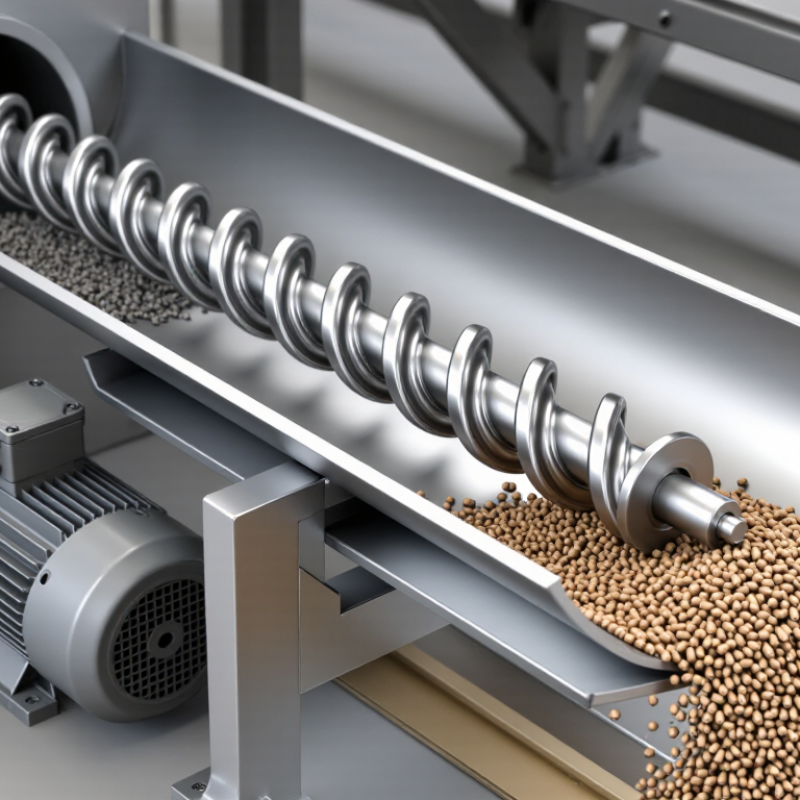
A Screw Conveyor is a mechanical device that moves bulk materials through a trough or enclosed tube. Its rotating helical flight, commonly called an auger, pushes material forward as the shaft turns. The concept looks simple. The design is not.

Bulk-solids pioneer Andrew Jenike expressed a useful warning: “Bulk solids are not fluids.” This principle explains why Screw Conveyor performance depends on material behavior, not only motor power. Flour, grain, ash, pellets, and wet sludge can travel differently through the same equipment. Each material may require a different flight pitch, diameter, speed, or trough arrangement.

Inside the conveyor, the screw flight creates controlled movement. Gravity keeps the material near the bottom, while rotation carries it toward the discharge point. A direct drive may suit short, steady applications. A geared drive can provide stronger torque for dense or difficult materials. Small design choices matter.

Clearances matter too.

If the flight rubs against the trough, wear increases. If the conveyor runs too fast, the material may churn instead of moving smoothly. Poor inlet design can create uneven loading, product damage, or sudden motor overloads. These problems are often blamed on the conveyor itself. Sometimes, the real mistake began during material testing or installation.

This guide explains what a Screw Conveyor is, how it works, and where it performs best. It also examines common designs, operating limits, maintenance points, and practical selection factors. Some applications remain difficult to predict. Careful testing is still wiser than relying on a standard formula alone.
What Is a Screw Conveyor and How Does It Work?

What Is a Screw Conveyor?

What Is a Screw Conveyor?

A screw conveyor is a mechanical device that moves bulk materials through a trough or enclosed tube. Its main part is a rotating helical blade, often called a screw or auger. A motor and gearbox turn the screw at a controlled speed. Material enters through an inlet, then the rotating flight pushes it toward the discharge point. Depending on its design, the conveyor can move powders, grains, pellets, ash, or damp industrial materials. It works horizontally, at an incline, and sometimes vertically.

The conveyor’s performance depends on screw diameter, pitch, rotation speed, and material behavior. A wider screw can carry more volume, while a slower speed may reduce dust and product damage. In practical operation, uneven feeding can cause surging or blockage. Moist material may stick to the flighting. This is easy to overlook. Regular checks should cover bearings, seals, motor load, and buildup inside the trough. A screw conveyor is reliable, but it is not suitable for every material or distance.

Tips: Match the screw design to the material before installation. Check moisture, temperature, density, and particle size. Keep guards secured and isolate power before maintenance. A short test run can reveal vibration, unusual noise, or poor discharge flow. Even experienced operators should review the layout when conditions change.

What Are the Main Components of a Screw Conveyor?

A screw conveyor moves bulk material through a rotating helical flight inside a trough or tube. Its main components look simple, but each one affects capacity, wear, and safety. The screw flight pushes material forward, while the shaft carries torque from the drive assembly. Some designs use a center pipe; others use a solid shaft for heavier loads.

The trough or tubular casing contains the material and supports controlled movement. End plates, seals, and inspection covers help prevent leakage and dust escape. Hanger bearings support longer shafts, although they can create friction and interrupt product flow. The drive usually includes a motor, gearbox, coupling, and protective guard. According to CEMA’s Screw Conveyors for Bulk Materials guidance, flight diameter, pitch, speed, and loading percentage must be selected together. Changing only one variable can reduce performance.

A 2024 industrial equipment market assessment projected steady growth in bulk-handling equipment through the decade, driven by food, mining, and process industries. That trend does not make every conveyor suitable. In field inspections, buildup often appears near inlet zones first. It can distort capacity readings. OSHA machine-guarding requirements, including 29 CFR 1910.212, also emphasize guarding exposed rotating parts. I have found that maintenance access is frequently underestimated. Good design needs clear covers, reachable bearings, and realistic cleaning time. Small details matter.

How Does a Screw Conveyor Move Bulk Materials?

A screw conveyor moves bulk materials by rotating a helical flight inside a trough or tube. The flight acts like a moving ramp. Each rotation pushes material forward through controlled shear and friction. It is simple. Yet material flow is rarely perfect.

The Conveyor Equipment Manufacturers Association (CEMA) capacity tables calculate output using screw diameter, pitch, speed, loading percentage, material density, and inclination. For example, a larger diameter carries more volume, while a steep angle usually reduces capacity. Moist powder may cling to the flight. Dry granules can slide, surge, or create uneven loading. Operators often hear this as a changing motor sound.

Drive torque starts the flight and maintains rotation under load. CEMA guidance recommends checking horsepower, starting conditions, and material class rather than selecting speed alone. A 2023 technical review from Powder and Bulk Engineering also emphasizes matching trough design with flow behavior and cleaning requirements. These details matter around discharge points. A small clearance error can encourage buildup.

In field work, I would inspect the first few minutes of operation. The material should advance steadily, without compacting near the inlet. This is where theory can disappoint. Laboratory density may not match a humid plant floor. Temperature, moisture, and particle shape change the result. I would confirm capacity with measured mass flow, motor current, and inspection records before accepting the design.

What Is a Screw Conveyor and How Does It Work? - How Does a Screw Conveyor Move Bulk Materials?
Data Dimension Typical Data or Description How It Affects Bulk-Material Movement
Primary Function Continuous conveying of bulk solids The conveyor transfers loose material through a trough or enclosed tube by rotating a helical screw flight around a central shaft.
Main Operating Principle Rotational motion converted into axial material flow As the screw rotates, the flight pushes material forward. Friction between the material and the conveyor surfaces helps prevent the bulk solid from simply rotating with the screw.
Core Components Screw flight, shaft, trough or tube, drive, bearings, inlet, and discharge Each component supports material containment, controlled rotation, alignment, loading, or discharge.
Screw Flight Helical ribbon wrapped around a shaft The flight provides the pushing surface. Its diameter, pitch, thickness, and profile influence capacity, power demand, and material handling behavior.
Shaft Arrangement Shafted or shaftless Shafted designs are widely used for conventional dry bulk solids. Shaftless designs can handle certain sticky, stringy, or difficult materials with fewer internal obstructions.
Conveyor Enclosure U-trough, tubular housing, or covered trough An enclosed housing limits dust release, protects the product from contamination, and improves safety in dusty or weather-sensitive applications.
Common Flight Types Standard, variable-pitch, tapered, ribbon, cut-flight, and paddle Flight geometry can regulate feed rate, improve mixing, reduce buildup, support aeration, or accommodate materials with different flow characteristics.
Typical Materials Powders, granules, pellets, flakes, chips, and moist solids Examples include grain, flour, cement, lime, ash, fertilizer, plastic pellets, wood chips, food ingredients, and wastewater screenings.
Material Flowability Free-flowing, sluggish, cohesive, abrasive, or sticky Flowability affects filling, power requirements, possible bridging at the inlet, and the choice of flight profile and conveyor speed.
Bulk Density Material-specific; commonly expressed in kg/m³ or lb/ft³ Bulk density is required to convert volumetric conveying capacity into mass flow and influences torque and drive sizing.
Particle Size Fine powder to coarse particles, depending on equipment design Particle size affects the required clearance, risk of segregation, wear rate, and the possibility of particle damage.
Screw Diameter Selected according to capacity, material, and installation limits A larger diameter generally provides greater volumetric capacity at a comparable fill level and speed, but it also increases equipment size and power demand.
Flight Pitch Often close to the screw diameter for standard conveying; reduced pitches are also used Pitch determines how far material tends to advance per revolution. Shorter pitches can improve control and increase the residence time.
Rotational Speed Application-dependent; many industrial units operate at low to moderate speeds Increasing speed can raise capacity, but excessive speed may increase wear, dust, particle degradation, and material centrifuging.
Loading or Fill Level Common design ranges include partial loading rather than a completely full trough Controlled fill prevents excessive torque and allows the screw to move material consistently without overloading the drive.
Conveying Direction Horizontal, inclined, or vertical The screw can move material horizontally and upward. Inclined and vertical conveying generally require special design and reduce effective capacity.
Incline Effect Capacity typically decreases as the angle increases Material tends to slide backward between flights at higher inclines. The exact reduction depends on material properties, pitch, speed, and fill level.
Throughput Basis Volumetric rate or mass rate Capacity is influenced by screw diameter, pitch, rotational speed, loading efficiency, conveyor angle, and bulk density.
Drive System Electric motor with gearbox or geared motor The drive supplies the torque required to overcome material resistance, friction, startup load, elevation, and any plugging tendency.
Metering Capability Good when speed and inlet loading are controlled Variable-speed drives and controlled feed gates allow the screw conveyor to function as a feeder as well as a transporter.
Mixing Function Possible with suitable flight or shaft arrangements Paddles, multiple inlets, variable pitch, or counteracting flight sections can promote blending while material travels through the conveyor.
Heating or Cooling Available in jacketed or specially designed units A jacket around the trough or tube can transfer heat to or from the material during conveying and processing.
Advantages Compact layout, enclosed transfer, controlled flow, and flexible installation The compact form suits short or moderately long routes and can combine conveying, feeding, mixing, and controlled discharge.
Limitations Potential wear, power demand, buildup, and particle degradation A screw conveyor may be unsuitable for highly fragile products, very long distances, extremely abrasive materials, or materials that readily compact without specialized design.
Maintenance Points Bearings, seals, flights, liners, drive, and alignment Regular inspection helps identify wear, material buildup, abnormal noise, overheating, loose connections, and changes in power consumption.
Safety Considerations Guarding, lockout/tagout, covers, and controlled access The rotating screw presents entanglement and crushing hazards. Access covers should remain secured, and power must be isolated before maintenance.
Best Selection Inputs Material properties, required capacity, route, incline, temperature, and duty cycle Accurate equipment selection requires both process data and mechanical information so the conveyor can achieve the target flow without excessive wear or overload.
Note: Actual capacity, speed, power, and dimensional requirements must be confirmed through engineering calculations based on the specific material and operating conditions.

What Types of Screw Conveyors Are Available?

A screw conveyor moves bulk material through a rotating helical flight inside a trough or tube. The screw pushes material forward, much like a rotating auger. Its design changes significantly with product behavior, distance, and elevation.

Horizontal screw conveyors suit powders, grains, and small aggregates. Inclined models lift material, but capacity usually falls as the angle increases. Vertical screw conveyors save floor space, although they demand careful speed and feed control.

Shaftless conveyors handle sticky sludge, food waste, and other materials that wrap around a central shaft. Tubular conveyors provide better dust control. Twin-screw designs improve mixing and feeding consistency.

Live-bottom conveyors use multiple screws beneath a hopper, helping prevent bridging. The Conveyor Equipment Manufacturers Association identifies pitch, diameter, speed, and trough loading as key sizing factors.

A 2024 report from Grand View Research also describes automation and enclosed conveying as major market drivers. These trends matter where dust, labor, and product loss must be controlled.

Tips: Test the actual material before selecting a conveyor. Check moisture, temperature, abrasiveness, and bulk density. Keep the loading rate realistic. I have seen theoretical capacity look impressive, then drop sharply because the material formed a bridge. That weakness deserves attention. A shaftless model may solve buildup, but it can increase wear and maintenance costs. Selective compromises are normal. Clearance, seals, access doors, and emergency stops should be reviewed during layout, not after installation.

Where Are Screw Conveyors Used?

Screw conveyors are used wherever dry or semi-moist bulk materials must travel a controlled distance. A rotating helical flight pushes material through a trough or enclosed tube. In grain facilities, operators move flour, rice, feed, and seed between storage bins and processing equipment. Their enclosed design helps limit dust and protects material from weather. They fit tight spaces. At a food plant, a stainless conveyor can carry measured ingredients toward a mixer. At a wastewater facility, similar equipment transfers screenings, sludge, or dewatered solids.

Construction sites and aggregate plants use larger units for sand, cement, ash, and crushed stone. A horizontal model works well for steady transfer. An inclined model can lift material, but capacity usually drops as the angle increases. Technicians watch motor load, bearing temperature, and unusual vibration during operation. These checks reveal blockages before they damage the drive or flight. In practice, moisture changes everything. Sticky material may cling to the flight, while abrasive material can wear flight edges quickly.

Choosing a conveyor requires more than matching length and motor power. Material density, temperature, particle size, and feed rate all matter. An engineer should also check cleanout access and guarding around moving parts. Field inspections often reveal poorly planned layouts with dead zones where material collects. That problem is easy to overlook. Operators may then need frequent manual cleaning, reducing expected efficiency. Screw conveyors are reliable, but they are not universal. Fragile products may break, while very wet mixtures can resist movement. A site trial or careful calculation often prevents an expensive redesign.

What Is a Screw Conveyor and How Does It Work?

A screw conveyor moves bulk materials through a trough or tube using a rotating helical flight mounted on a shaft. It is commonly used for grain, cement, chemicals, food ingredients, wood products, and wastewater solids.

Typical design guideline: a horizontal screw conveyor is assigned 100% relative conveying capacity. Capacity generally decreases as the conveyor becomes steeper because gravity increases material fallback and reduces the effective fill rate. Actual performance depends on material characteristics, screw diameter, pitch, speed, loading, and trough design.

Where Are Screw Conveyors Used?

Screw conveyors are used for controlled conveying, feeding, mixing, elevating, and extracting bulk solids. Common applications include grain handling, cement and aggregate processing, food production, chemical processing, biomass and wood handling, and wastewater treatment.