7 Tips for Choosing a Hydraulic Truck Crane?

Choosing a hydraulic truck crane is not simply a matter of lifting capacity or purchase price. A suitable machine must match the load, working radius, terrain, transport limits, and maintenance capability. On a crowded construction site, a small specification error can become a serious operational problem.

The U.S. Occupational Safety and Health Administration cites an average of 82 crane-related fatalities annually between 1992 and 2006, based on Bureau of Labor Statistics data. That historical figure still deserves attention. It shows why selection decisions should begin with verified engineering information, not sales claims. Capacity charts, outrigger requirements, boom length, rated load moments, and inspection records need careful review. Standards such as ASME B30.22 and EN 13000 also provide useful reference points for safe crane design and operation.

This guide explains seven practical tips for choosing a hydraulic truck crane. It considers real jobsite demands, including uneven ground, restricted access, frequent relocation, and changing weather. A crane that performs well in a supplier’s demonstration may struggle beside a building or beneath overhead cables. Details matter. Very much.

Professional experience also requires honest reflection. The cheapest crane may create higher fuel, downtime, and servicing costs later. Conversely, selecting the largest model can waste capital and reduce maneuverability. There is no universal best choice. Buyers should compare manufacturer data, independent inspections, operator feedback, and local compliance requirements. These checks help create a defensible decision based on evidence, not assumptions. Even experienced teams can overlook one detail. That is why a structured selection process remains valuable.

7 Tips for Choosing a Hydraulic Truck Crane?

Define the Lifting Tasks and Required Crane Capacity

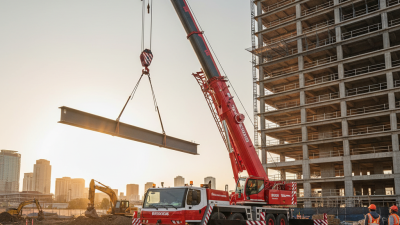
Define the lifting tasks before choosing a hydraulic truck crane. Record the load’s weight, dimensions, center of gravity, lifting height, and placement distance. Include rigging equipment, fuel, and attachments. These details determine the real gross load. A 10-ton machine does not lift 10 tons at every radius. It may lift far less at full boom extension.

Read the manufacturer’s load chart for the exact configuration. Check boom length, working radius, counterweight, outriggers, ground conditions, and allowable swing area. OSHA’s crane standard, 29 CFR 1926.1417, requires operators to follow rated capacities and manufacturer procedures. The CPWR Data Bulletin on construction crane deaths recorded 297 fatalities from 2011 to 2020, averaging nearly 30 deaths annually. Capacity mistakes can become severe quickly.

Measure the site, too. A truck crane beside a 12-meter building may need more capacity than the same lift beside a five-meter structure. Keep a practical reserve, but avoid choosing an oversized crane without checking access and ground pressure. Oversizing is not automatically safer. It can increase setup demands and project costs. I have seen planners focus on the headline capacity and overlook radius. That shortcut deserves criticism. Recheck the lift plan after weather, ground conditions, or load dimensions change. A qualified lift supervisor should verify the calculations against current load charts and site conditions.

7 Tips for Choosing a Hydraulic Truck Crane? - Define the Lifting Tasks and Required Crane Capacity
Tip Lifting Task Typical Load Approximate Load Weight Working Radius Recommended Minimum Rated Capacity Important Selection Considerations
1. Define the heaviest load Loading steel beams, precast panels, or heavy machinery Single heavy component plus lifting accessories 5,000–10,000 kg 8–12 m 10–16 tonnes Include the weight of slings, shackles, spreader beams, and other rigging. The crane must handle the total suspended load, not only the item being lifted.
2. Identify routine lifting work Construction material delivery and general site handling Pallets of bricks, concrete blocks, timber, or pipes 1,000–3,000 kg 6–10 m 5–10 tonnes A crane selected for repeated daily work should provide sufficient capacity without operating continuously at its maximum load-chart limit.
3. Check the maximum lifting radius Placing loads over obstacles or inside a building site Equipment or materials positioned away from the truck 2,000–5,000 kg 12–18 m 8–16 tonnes Crane capacity decreases as boom length and working radius increase. Always verify the manufacturer’s load chart for the exact radius and boom configuration.
4. Allow for lifting height Installing roof units, HVAC equipment, or structural components Roof-mounted equipment or elevated structural parts 1,500–4,000 kg 8–14 m 6–12 tonnes The required boom length, elevation angle, and radius must all be considered. A longer boom does not automatically provide greater lifting capacity.
5. Consider frequent multi-load operations Utility maintenance, infrastructure work, and road construction Several pipes, barriers, tools, or replacement components 500–2,500 kg per lift 5–10 m 4–8 tonnes Prioritize smooth hydraulic control, fast setup, adequate slewing range, and a load moment indicator when the crane will perform many lifts per shift.
6. Account for site restrictions Lifting in narrow streets, confined yards, or uneven work areas Light machinery, generators, or construction supplies 500–2,000 kg 4–8 m 3–6 tonnes Check truck dimensions, outrigger footprint, ground bearing pressure, overhead clearance, and available working space before selecting the crane configuration.
7. Add a practical capacity margin Mixed lifting duties with variable load weights Combination of materials and equipment 2,000–6,000 kg 8–12 m Rated capacity at least 20% above the planned total load Use the load chart rather than the crane’s headline maximum capacity. A margin helps accommodate load variation, rigging weight, and normal operating uncertainty, but it does not replace a qualified lift plan.
Note: The figures are general planning ranges only. Final crane selection must be based on the actual load weight, center of gravity, lifting accessories, boom length, working radius, outrigger position, ground conditions, and the crane manufacturer’s certified load chart.

Compare Hydraulic Systems, Boom Designs, and Operating Performance

7 Tips for Choosing a Hydraulic Truck Crane

Start with the hydraulic system, not the paint or advertised lifting figure. Compare pump capacity, control sensitivity, relief-valve settings, and oil-cooling performance. A smooth system should lift steadily without sudden jerks. Check the rated flow at working pressure, because maximum flow alone can mislead. Inspect hose routing and fittings for protection from heat, abrasion, and sharp movement. Ask for service records and test the crane under a realistic load.

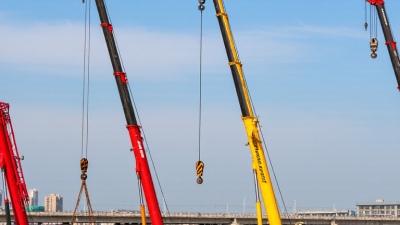
Boom design affects both reach and stability. Telescopic booms offer compact storage and quick extension, while lattice or articulated designs may provide better reach in specific work areas. Count the boom sections and examine their overlap. More sections are convenient, but they can reduce stiffness when fully extended. Measure the reach. Review the load chart at every angle, not only its best-looking number. A wider outrigger stance can improve stability, yet it may not fit crowded streets or narrow sites.

Operating performance becomes clear during repeated cycles. Watch how quickly the boom extends, slews, lowers, and returns to position. Listen for pump noise and observe whether the oil temperature rises after sustained use. I once favored a crane with impressive reach, but its controls felt slow during precise placement. That mistake changed my inspection routine. Now I test cold and warm performance, check visibility from the operator’s position, and compare lifting capacity at common working radii. A perfect-looking crane can still feel unsuitable after an hour of real work. Check the controls. Test the limits carefully.

7 Tips for Choosing a Hydraulic Truck Crane

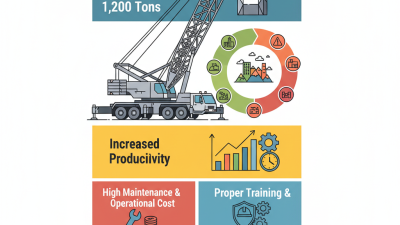
Compare hydraulic systems, boom designs, and operating performance using representative specifications for common truck-crane capacity classes.

The chart uses typical industry-range values for truck cranes rated from 5 to 20 tonnes. Actual lifting capacity depends on boom length, working radius, counterweight, outrigger position, and load-chart restrictions.

Selection Tips

  1. Check rated capacity at the working radius, not only the maximum advertised capacity.
  2. Compare hydraulic system pressure and pump flow to evaluate lifting speed and control response.
  3. Choose a boom design that matches the required reach, transport height, and job-site access.
  4. Review the full load chart for every boom extension and outrigger configuration.
  5. Evaluate cycle time, control smoothness, and low-speed positioning accuracy.
  6. Confirm outrigger spread, ground-bearing requirements, and available operating space.
  7. Consider maintenance access, hydraulic hose protection, safety systems, and operator visibility.

Check Truck Compatibility, Stability, and Site Access

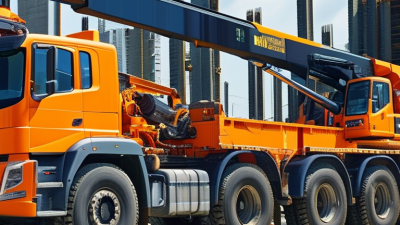
Choosing a hydraulic truck crane starts with truck compatibility. Check the truck’s gross vehicle weight rating, axle limits, bed length, and hydraulic capacity. The crane must match the chassis, not merely fit on it. Review the load chart at the planned boom length and working radius. A crane may lift 10 tonnes near its base but far less at full reach. Measure twice. Leave room.

Stability depends on ground conditions and setup. OSHA 29 CFR 1926.1402 requires ground conditions to support the crane, including its maximum anticipated load. Inspect soil, drainage, slopes, and hidden voids before arrival. Deploy outriggers fully when the manufacturer’s load chart requires them. Use suitable mats on weak surfaces, but do not assume mats solve every problem. CPWR’s Data Bulletin, using Bureau of Labor Statistics records, identified 297 crane-related fatalities from 2011 through 2017. That figure deserves attention, especially around unstable ground and poor planning.

Site access is equally practical. Measure gate widths, turning radii, overhead clearance, bridge limits, and underground service locations. Confirm the travel route with the site supervisor, not only with a digital map. Power lines need controlled clearance and a documented lift plan. A small route error can force a dangerous last-minute repositioning. I still find this step easy to underestimate. Weather, parked vehicles, and uneven surfaces can change the plan within minutes. Check the site again before lifting.

Evaluate Safety Features, Controls, Maintenance, and Service Support

Choosing a hydraulic truck crane starts with the operator’s real working day, not a glossy specification sheet. Check safety features such as overload protection, emergency stops, boom angle indicators, and stable outriggers. Test every alarm beside the truck. It should be clear, not painfully loud. Inspect the controls from the seat. Levers should feel predictable, labels should remain readable in rain, and proportional control should prevent sudden load movement. Ask whether remote controls include pairing protection and a visible low-battery warning. Small details matter.

Review maintenance access before purchase. Can a technician reach filters, hoses, grease points, and inspection ports without awkward climbing? Look for guarded hydraulic lines, clean routing, and a service-hour display. Request maintenance intervals, fluid specifications, and records from comparable units. Service support deserves equal scrutiny. Ask about response times, technician coverage, spare-part availability, and practical training. A crane may perform well in a showroom yet lose value during a weeklong delay. Arrange a supervised lifting trial with a typical load, uneven ground, and the attachments you actually use. Record boom movement, oil temperature, noise, and setup time. We once overlooked storage for the remote handset; it later became an avoidable nuisance. Leave room for doubt. Recheck the load chart with an independent qualified inspector when site conditions change.

Review Total Ownership Costs, Regulations, and Supplier Reliability

7 Tips for Choosing a Hydraulic Truck Crane

Choosing a hydraulic truck crane starts with ownership costs, not the purchase price. Review fuel use, scheduled servicing, tire wear, insurance, storage, and resale value. Tip: record one month of operating data before comparing options. Check lifting capacity at your usual boom reach, not the advertised maximum. Tip: calculate costs during busy and quiet periods. A low quote can hide expensive downtime. Do not guess.

Regulations also shape the final cost. Confirm road-weight limits, inspection duties, operator certification, load-chart requirements, and site access rules. Tip: ask the supplier to explain required documents clearly. Keep inspection records and manuals organized. Tip: budget for training, permits, and periodic inspections before signing. Rules vary by region. A compliance gap may delay a project for several days.

Supplier reliability matters after delivery. Check technician response times, parts availability, warranty terms, and emergency support. Tip: speak with working users, not only sales-selected references. Request a written maintenance schedule with clear exclusions. During a demonstration, inspect hydraulic hoses, controls, welds, and leak points. Small details matter. I once underestimated transport costs because site setup was excluded. Tip: compare three suppliers using the same cost template. Then challenge every assumption.