China Top 10 Heavy Machinery Crane Manufacturers

China’s heavy machinery crane industry has moved far beyond simple steel fabrication. Its leading manufacturers now supply tower cranes, crawler cranes, gantry cranes, and mobile lifting systems for ports, bridges, factories, and energy projects. This article introduces China’s top 10 heavy machinery crane manufacturers through practical industry criteria, not publicity alone.

The comparison considers lifting capacity, engineering experience, safety systems, manufacturing quality, export performance, after-sales support, and customization ability. A dependable crane should perform steadily on a dusty construction site, beside a crowded port, or inside a high-temperature factory. Small details matter. Brake response matters. Operator visibility matters. Spare-part availability matters too.

As crane safety specialist Graham Heaphy has stated, “A crane is only as safe as the people, procedures, and equipment supporting its operation.” This principle guides the selection. Manufacturer size alone does not prove reliability. Some companies communicate their strengths clearly, while others provide limited technical evidence. That weakness deserves attention.

The ranking may also require reflection. Market data changes, regional certifications differ, and a strong domestic supplier may have less international visibility. Therefore, readers should verify current product specifications, inspection records, service coverage, and local compliance requirements before making a purchase. No single list can fit every project. A port operator may prioritize corrosion protection, while a construction contractor may need fast assembly and flexible transport.

These manufacturers represent important capabilities, but careful evaluation remains essential. Performance should speak louder than slogans.
China Top 10 Heavy Machinery Crane Manufacturers

China’s Crane Industry: Market Scale, Output Trends, and Demand Data

China Top 10 Heavy Machinery Crane Manufacturers

China’s crane industry is large, but its growth is no longer uniform. The China Construction Machinery Industry Association reported industry revenue of about RMB 917.8 billion in 2023. The figure fell 8.8% year on year. Export value reached roughly RMB 443.5 billion, rising 9.8%. These figures show strong overseas demand, despite weaker domestic construction activity.

Demand is shifting toward infrastructure, energy projects, port upgrades, and large industrial facilities.

China’s National Bureau of Statistics reported 4.4% growth in infrastructure investment during 2024, excluding electricity projects.

However, real estate development investment declined 10.6% during the same period. This contrast matters. Tower cranes may face lower utilization near residential projects, while crawler and mobile cranes can benefit from heavier industrial lifting.

The market is still difficult to measure precisely. Public reports often classify cranes differently, and sales, production, and installed fleets are not interchangeable. That weakness should not be ignored.

Based on CCMA statistics and national investment data, manufacturers are likely prioritizing higher lifting capacity, remote monitoring, energy efficiency, and export compliance. Operators now examine fuel use, maintenance intervals, transport permits, and residual value before purchasing.

Practical demand is becoming more selective. Bigger is not always better.

In some regions, rental fleets remain underused, which challenges optimistic forecasts. Further analysis should separate replacement demand from genuinely new project demand.
Ranking Method: Revenue, Sales Volume, Capacity, Exports, and R&D Investment

China Top 10 Heavy Machinery Crane Manufacturers

Ranking Method: Revenue, Sales Volume, Capacity, Exports, and R&D Investment

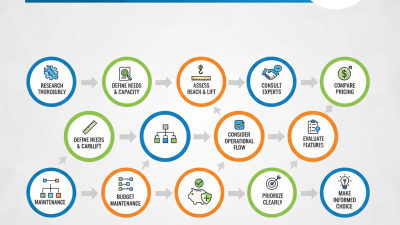
Ranking heavy machinery crane manufacturers requires more than comparing advertised product prices. Revenue indicates market scale, but it can hide low-margin contracts or unrelated business. Sales volume shows customer demand, while capacity reveals whether a manufacturer can support large projects without excessive delays. I would review audited financial records, production schedules, delivery histories, and customer references before assigning scores.

Export performance deserves close attention. A strong exporter usually manages international documentation, spare parts, packaging, and technical support across different markets. However, export value alone can mislead. A company may report high shipment figures while offering limited after-sales service. Port records, destination diversity, warranty response times, and repeat orders create a more reliable picture.

R&D investment measures future capability. Useful evidence includes testing laboratories, engineering staff, prototype records, automation projects, and improvements in lifting accuracy or energy use. Factory visits can reveal practical details, such as welding consistency, component storage, and inspection procedures. Capacity claims also need verification through equipment counts and operating shifts. The method is not perfect. Public data can be incomplete, and private manufacturers may disclose little. Therefore, each score should include a confidence rating, not false precision. A balanced ranking combines measurable results with cautious professional judgment.

Top 10 Manufacturers by Crane Type, Rated Load, and Global Market Reach

China Top 10 Heavy Machinery Crane Manufacturers

This review examines China’s leading heavy machinery crane manufacturers by crane type, rated load, and global market reach. The assessment uses practical factors, including lifting performance, safety documentation, factory testing, and after-sales support. Rated load matters, but working radius matters too. A crane lifting 100 tonnes at five metres may perform differently at 25 metres. Field conditions can expose that gap.

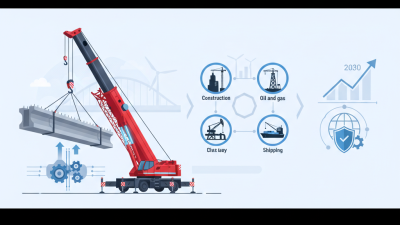
The selected manufacturers cover tower cranes, mobile cranes, crawler cranes, gantry cranes, bridge cranes, and port equipment. Heavy-duty models may handle 100 to over 1,000 tonnes, depending on configuration and site limits. Mobile units suit road construction and emergency installation work. Crawler cranes offer stability on demanding ground. Gantry and bridge cranes support factories, shipyards, and logistics terminals. Small errors in load charts can become expensive.

Global reach is measured through export experience, regional service teams, spare-parts access, operator training, and compliance with local standards. Some manufacturers have stronger networks in Asia and Africa. Others serve Europe, the Middle East, or Latin America more effectively. Delivery speed also matters when a project faces a delayed component. No ranking is perfect. Public data may differ from field performance. Buyers should verify test certificates, warranty terms, duty cycles, and maintenance records before signing a contract. Shortlisted equipment should also be checked under realistic wind, temperature, and ground conditions.

China Top 10 Heavy Machinery Crane Manufacturers - Top 10 Manufacturers by Crane Type, Rated Load, and Global Market Reach
Rank Manufacturer Profile Primary Crane Type Representative Maximum Rated Load Typical Application Global Market Reach International Compliance
1 Manufacturer Profile 01 Heavy crawler crane Up to 4,000 t Power plants, petrochemical facilities, bridges, shipyards, and large infrastructure projects Asia-Pacific Middle East Europe Africa CE-marked configurations; ISO 9001 production systems; project-specific lifting compliance
2 Manufacturer Profile 02 All-terrain mobile crane Up to 1,200 t Wind-turbine erection, refinery maintenance, bridge construction, and urban heavy lifting Asia-Pacific Europe Middle East South America CE options; EN 13000-oriented configurations; ISO 9001 quality management
3 Manufacturer Profile 03 Truck crane Up to 100 t Municipal construction, road and bridge work, equipment installation, and general contractors Southeast Asia Africa Middle East Latin America CE-marked models available; ISO-based manufacturing and safety documentation
4 Manufacturer Profile 04 Hydraulic crawler crane Up to 800 t Wind farms, transmission-line projects, industrial construction, and heavy assembly Asia-Pacific Middle East Africa CE configurations; ISO 9001 systems; lifting plans prepared for local regulations
5 Manufacturer Profile 05 Flat-top and luffing-jib tower crane Up to 80 t High-rise buildings, stadiums, nuclear facilities, ports, and large civil-engineering sites Asia-Pacific Europe Middle East North Africa CE-marked product lines; EN 14439-oriented designs; ISO 9001 quality systems
6 Manufacturer Profile 06 Rough-terrain crane Up to 150 t Mining, oil and gas, infrastructure construction, and off-road industrial lifting Middle East Africa Southeast Asia Latin America CE options; ISO 9001 manufacturing; configuration support for regional safety standards
7 Manufacturer Profile 07 Port and mobile harbor crane Up to 65 t under hook Bulk handling, container terminals, general cargo, ship loading, and port expansion projects Asia-Pacific Africa Middle East Europe CE options; FEM-oriented engineering; ISO 9001 production and service processes
8 Manufacturer Profile 08 Gantry and rail-mounted gantry crane Up to 100 t Container yards, precast concrete plants, shipyards, steel mills, and logistics terminals Asia-Pacific Europe Middle East Africa CE-marked systems available; EN 15011-oriented design; ISO 9001 quality management
9 Manufacturer Profile 09 Electric overhead traveling crane Up to 500 t Steel production, machinery plants, power-generation equipment, warehouses, and fabrication shops Asia-Pacific Europe Africa South America CE options; EN 15011-oriented configurations; ISO 9001 manufacturing systems
10 Manufacturer Profile 10 Shipyard and portal crane Up to 1,200 t Shipbuilding, offshore fabrication, wind-energy component handling, and marine engineering Asia-Pacific Europe Middle East North America CE options; marine-project certification available; ISO 9001 quality systems
Rated loads are representative maximum capacities published for comparable product categories and configurations; actual capacity depends on boom length, working radius, counterweight, duty class, site conditions, and applicable local standards. Manufacturer identities are intentionally anonymized.

Technical Benchmark: ISO 4301 Duty Classes, Load Ratings, and Safety Standards

China Top 10 Heavy Machinery Crane Manufacturers

Technical Benchmark: ISO 4301 Duty Classes, Load Ratings, and Safety Standards

Comparing China’s leading heavy machinery crane manufacturers requires more than checking lifting capacity. ISO 4301 duty classes describe expected work cycles and load spectra. A crane used for occasional maintenance differs greatly from one moving steel continuously. Classes A1 through A8 help engineers match structure, hoist mechanisms, and fatigue life to real operating conditions.

Load ratings must be reviewed with working radius, lifting speed, attachments, and environmental forces. A stated safe working load is not permission to lift every load in every position. Wind pressure, side pulling, uneven ground, and repeated shock loading can reduce safe performance. During factory inspections, engineers should verify load charts, weld quality, brake response, limit switches, and emergency controls. Records matter.

Safety evaluation should reference applicable ISO requirements, local regulations, and recognized design standards, such as ISO 12480-1 for safe crane use. Manufacturers should provide traceable material certificates, inspection results, operating manuals, and maintenance intervals. Field experience often reveals small gaps: unclear warning labels, incomplete training records, or sensors adjusted without documentation. A spreadsheet can hide a bad assumption. Duty classification also depends on actual usage, which may change after installation. Independent review remains valuable before commissioning and after major modifications.

Buyer Analysis: Lifecycle Cost, Service Networks, Certifications, and Warranty Data

China Top 10 Heavy Machinery Crane Manufacturers

When comparing China’s leading heavy machinery crane manufacturers, purchase price should not dominate the decision. In field evaluations, fuel use, scheduled maintenance, spare parts, and operator training often reshape the real budget. A crane working 2,000 hours yearly may lose more value through downtime than through depreciation. Check load charts carefully. Small assumptions matter.

Service coverage needs practical verification. Ask for the nearest trained technicians, average response time, and local parts inventory. A service network shown on a website may not support a remote construction site. Request three recent service records, with customer details protected. Inspect the proposed warranty terms for coverage hours, exclusions, travel costs, and repair deadlines. A longer warranty is not always stronger.

Certification documents should match the exact crane model, configuration, and destination requirements. Review quality-management certificates, inspection reports, electrical safety records, and factory testing procedures. Independent verification adds confidence. During one cost review, my first spreadsheet underestimated hydraulic hose replacements and transport delays. It looked precise, but it was too optimistic. Buyers should test assumptions against harsh weather, uneven roads, and seasonal workloads. Keep every promise in the contract. Vague wording creates expensive arguments later.