Top Assist Crane Types for Efficient Lifting Solutions?
In the construction and manufacturing sectors, efficient lifting is crucial. The right equipment can greatly enhance productivity. Assist cranes have become indispensable in modern operations. According to a report by Grand View Research, the global crane market is expected to reach $22 billion by 2027. This reflects the growing reliance on advanced lifting solutions.
Assist cranes offer versatility and improve workplace safety. They can handle heavy loads with precision. Recent studies indicate that using assist cranes can reduce lifting injuries by 30%. This statistic underscores the importance of investing in these technologies. Industries must adapt to evolving challenges. Yet, not all companies fully understand how to utilize assist cranes effectively.
While the benefits are clear, shortcomings remain. Some operators may lack training, leading to misuse. Furthermore, not every assist crane suits every task. Misalignments can occur, especially in dynamic environments. Organizations should continually assess their lifting strategies. Embracing upgrades is vital to maintain an edge.

Understanding the Different Types of Assist Cranes in the Market
Assist cranes are vital for various lifting tasks. The market offers several types, each engineered for specific applications. Understanding these differences helps in selecting the right equipment.
One common type is the portable assist crane. These cranes are lightweight and easy to maneuver. They are perfect for small jobs or tight spaces. However, they may lack the strength needed for heavier loads. Users must carefully assess their lifting requirements.
Another type is the overhead assist crane. This crane utilizes ceiling tracks to provide lift and reach. It is efficient for warehouses where space is limited. Still, installation can be complex and costly. Users need to consider the operational environment before investing. Understanding the strengths and weaknesses of each type leads to better choices.
Top Assist Crane Types for Efficient Lifting Solutions
This chart illustrates the weight capacities of different types of assist cranes available in the market. It showcases how mobile, fixed, tower, articulating, and crawler cranes compare in their lifting capabilities, providing essential information for decision-makers seeking efficient lifting solutions.
Evaluating Technical Specifications for Optimal Lifting Capacity
When choosing assist cranes, evaluating technical specifications is crucial for optimal lifting capacity. Key specifications include load capacity, reach, and lifting speed. For instance, cranes with a higher tonnage can dramatically improve operational efficiency. Recent industry reports show that cranes with a lifting capacity of 20 tons can handle larger loads with more precision.
Tips: Always double-check the load capacity against your project requirements. It helps avoid costly mistakes and accidents.
Another essential aspect to consider is the crane's stability. Stability ensures the safety of workers and the integrity of the materials lifted. A study indicated that cranes with a wider base offer better stability but may limit their reach. Consider the balance between stability and reach based on your specific needs.
Tips: Regular maintenance checks are essential to ensure the crane operates safely. Neglect can lead to unexpected failures and delays in your project.
Always remember that the best assist crane is one that perfectly matches your needs. A crane chosen impulsively may bring challenges. Explore all technical specifications and don't rush your decision.
Analyzing Ergonomics and Safety Features in Assist Crane Design
When considering assist cranes, ergonomics and safety are critical. The design should prioritize user comfort and minimize physical strain. For example, adjustable heights can help operators position the crane at an optimal level. This flexibility reduces the risk of back injuries and enhances overall efficiency during lifting tasks.
Safety features like emergency stop buttons and load limit indicators are crucial. Operators feel more secure when these mechanisms are integrated. However, not all cranes incorporate such features effectively. Some models may have poorly placed buttons that are hard to reach in emergencies. This can lead to significant risks during operations.
Regular assessments of crane designs can highlight these shortcomings. Feedback from users enhances the understanding of what improvements are needed. Taking their experiences into account can lead to more innovative and safer designs in the future. The goal is to create cranes that are not only effective but also safe and comfortable to operate.
Comparing the Cost-Effectiveness of Various Assist Crane Models
Selecting the right assist crane model can significantly impact operational efficiency. Each type of crane has its own advantages and drawbacks. Emphasizing cost-effectiveness is vital for long-term investments.
A clear choice is a hydraulic crane. It offers powerful lifting capabilities with relative affordability. These cranes can be more efficient for heavy loads. However, maintenance can be challenging and costly. Users often overlook the hidden expenses involved in upkeep.
Electric cranes are also worth considering. They tend to be quieter and greener. Their operational costs are generally reduced, especially in repetitive lifting tasks. Yet, electric cranes can be limited in capacity compared to their hydraulic counterparts. Some users find these units inadequate for extensive projects. Balancing initial investment with potential long-term savings is crucial for making the best selection.
Top Assist Crane Types for Efficient Lifting Solutions
| Crane Type |
Average Cost ($) |
Lifting Capacity (tons) |
Maximum Height (m) |
Mobility |
Efficiency Rating (1-10) |
| Hydraulic Crane |
50,000 |
15 |
20 |
High |
9 |
| Electric Overhead Crane |
30,000 |
10 |
15 |
Moderate |
8 |
| Boom Truck Crane |
70,000 |
12 |
18 |
Very High |
7 |
| Self-erecting Crane |
40,000 |
10 |
12 |
High |
8 |
| Forklift Crane |
25,000 |
5 |
6 |
Moderate |
6 |
Examining Industry Applications and Use Cases for Assist Cranes
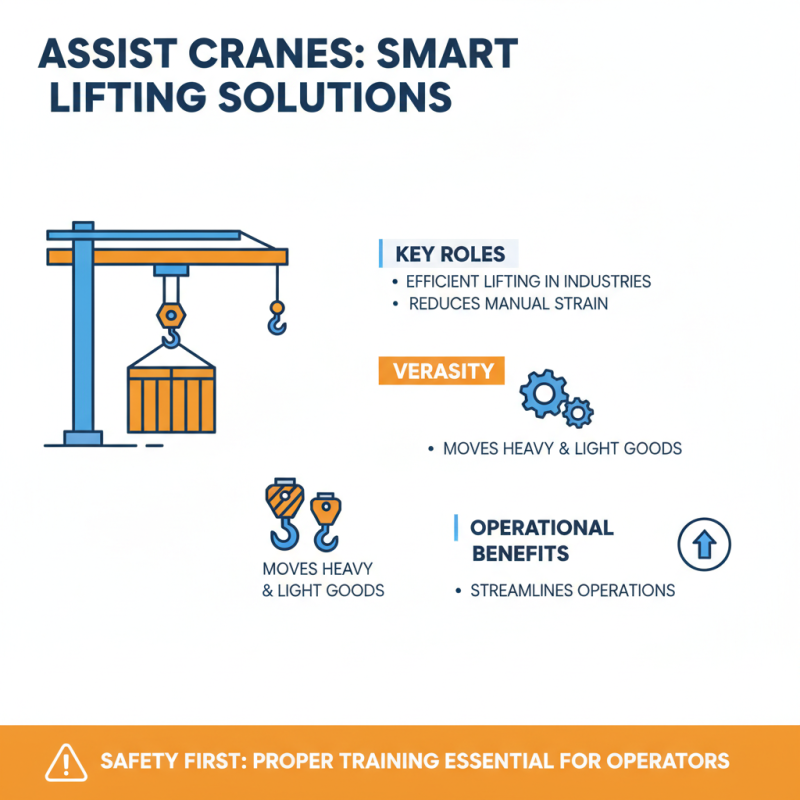
Assist cranes play a crucial role in various industries, offering efficient lifting solutions. In warehouses, they ease the movement of heavy goods, significantly reducing manual strain. These cranes are not just for big loads; they help with lighter items too. Using assist cranes can streamline operations. However, operators must receive proper training to ensure safe usage.
In construction settings, assist cranes are indispensable. They elevate materials to higher levels, supporting overhead tasks with ease. This minimizes risk of injury and enhances productivity. Yet, choosing the right type for specific tasks is vital. Each project requires careful consideration of weight limits and space constraints. Notably, some cranes can be bulky, making maneuverability in tight spaces a challenge.
Moreover, in manufacturing, assist cranes facilitate assembly work. They enable smooth material handling on production lines. However, high dependency on these cranes can lead to complacency among workers. Regular maintenance and inspections are necessary to avoid operational failures. Identifying the ideal assist crane type is not always straightforward. Each industry poses unique challenges that need thorough analysis.