Top 10 Truck and Crane Combinations for Heavy Lifting Tasks?
In the construction and logistics industries, efficiency is crucial. Utilizing the right truck and crane combination can significantly enhance overall productivity. According to a report by the American National Standards Institute, crane accidents often arise from improper equipment pairing. Safety and efficiency are therefore paramount.
The synergy between truck and crane systems is impressive. For instance, a truck equipped with a hydraulic crane can lift up to 25 tons. This allows for high-capacity transport and effective loading. Yet, not all combinations achieve optimal results. Careful consideration is essential when selecting equipment.
However, the quest for the best combination is not without challenges. Many operators face issues like limited maneuverability with certain pairs. It is vital to analyze each situation carefully. The wrong choice can lead to delays and increased costs. Ultimately, a well-chosen truck and crane combination not only boosts efficiency but also ensures safer job sites.
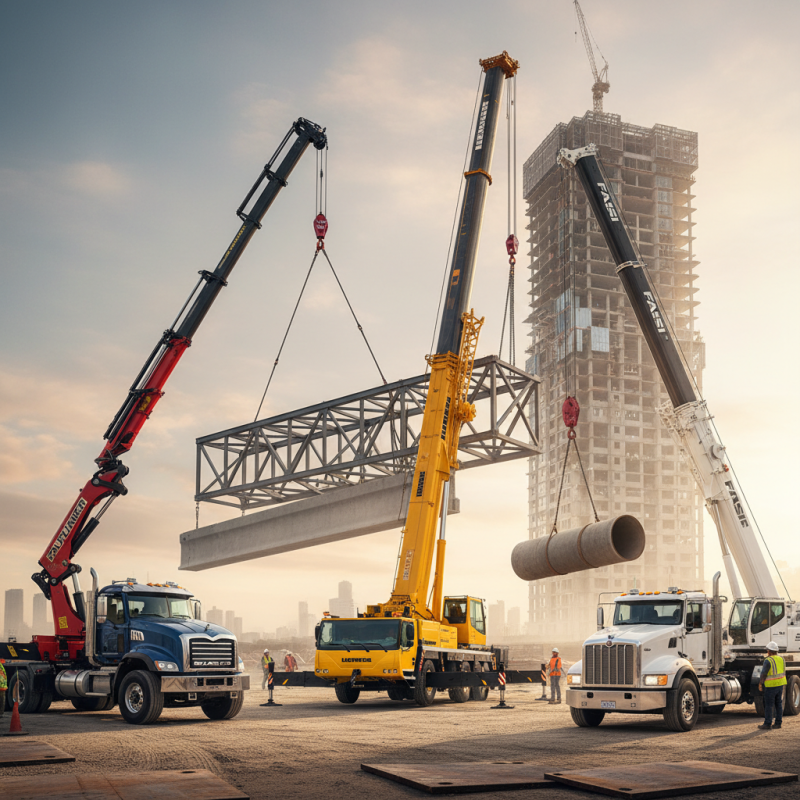
Top 10 Truck and Crane Combinations for Heavy Lifting Tasks
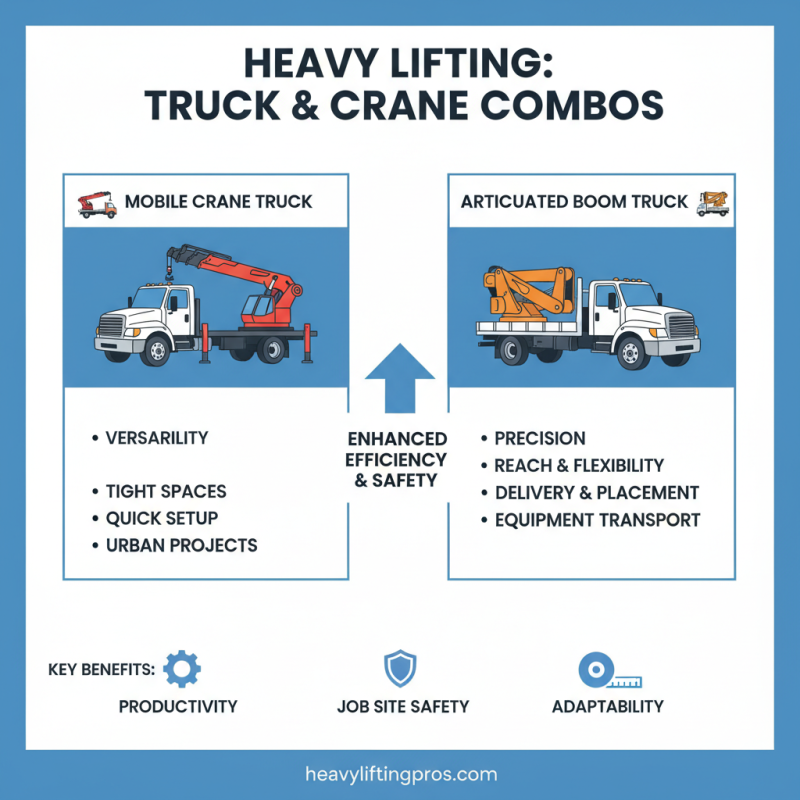
When it comes to heavy lifting tasks, choosing the right truck and crane combination is crucial. These combinations enhance efficiency and safety on the job site. Some configurations include a robust truck equipped with a mobile crane. This setup provides flexibility and can maneuver through tight spaces, making it a top choice for various projects.
Another worthy combination is a flatbed truck paired with a tower crane. The flatbed allows for easy transport of heavy materials. Meanwhile, the tower crane excels at lifting materials to significant heights. However, one must consider stability and ground conditions when using this combination. An unstable surface can lead to accidents.
Integrating a pickup truck with a small crane can be effective for residential tasks. This setup is compact and easy to handle. Workers can efficiently lift smaller loads. However, it has limited capacity. Overloading may pose risks. Reflecting on these choices is essential for optimizing performance and safety in heavy lifting operations.
Understanding the Importance of Lifting Capacity in Crane-Truck Combinations
When it comes to heavy lifting tasks, understanding lifting capacity is crucial. Each truck-crane combination has its unique strengths and limitations. A crane with a higher lifting capacity can handle massive loads, but it might not always be compatible with every truck. Ensuring the two work well together is essential for safety and efficiency.
It's not just about lifting weight. Stability plays a significant role. If a truck is not suited for the crane's weight, it can lead to accidents. Choosing the right combination requires careful consideration of both the load and the terrain. Some setups might struggle on uneven ground, causing performance issues.
There are often gaps in knowledge about these combinations. Many overlook the importance of weight distribution. A crane may lift well but could tip over if the truck can't support its weight. This mismatch highlights the need for better training and awareness. Without it, the risk of incidents increases. Understanding these factors can mean the difference between successful operations and dangerous failures.
Key Specifications: Load Ratings and Reach Capabilities of Leading Models
When considering heavy lifting tasks, selecting the right truck and crane combination is crucial. Load ratings are often the primary focus. Some models offer impressive lifting capacities, allowing for safe handling of substantial weights. Meanwhile, reach capabilities determine how far the crane can extend, affecting its effectiveness in various situations. Ensuring a balance between load capacity and reach is essential for efficient operations.
For instance, a crane with a high load rating might excel in heavy loads but lack sufficient reach for certain tasks. This could lead to challenges at job sites. Adjusting to these limitations requires careful planning and potential adjustments to the lifting approach. Conversely, a crane with great reach could sacrifice load capacity, leading to safety concerns if overburdened. Knowing these specifications helps operators make informed decisions.
In practical applications, operators may often find themselves facing unexpected challenges. Each project presents unique scenarios, which can test the limits of load ratings and reach. Regular assessments of equipment performance are necessary. Operators should reflect on how these combinations perform in real-world conditions. Adapting strategies based on specific needs is vital for successful heavy lifting operations.
Industry Standards: Safety Regulations for Heavy Lifting Equipment
Heavy lifting tasks often require a combination of trucks and cranes to ensure efficiency and safety. Understanding safety regulations is critical. The industry has established standards to safeguard operators and the surrounding workforce. These regulations dictate load limits, operational protocols, and maintenance checks to minimize accidents.
Each lifting operation varies in complexity. Factors include load weight, environmental conditions, and equipment compatibility. Operators need to conduct risk assessments before starting. For instance, a minor oversight in load calculations can lead to catastrophic failures. Even seasoned professionals sometimes skip these checks, leading to dangerous situations. Additionally, keeping equipment well-maintained is essential. Regular inspections can catch small issues before they escalate.
Training is another key aspect of safety. Crews should receive continuous education on best practices. Yet, some may overlook this, thinking they already know it all. This mindset can be risky. Safety is everyone's responsibility. A small lapse can have serious consequences. Regular drills and refresher courses can help maintain a safety-first culture on job sites.
Applications: Best Practices for Selecting the Right Combo for Your Task
Selecting the right truck and crane combination is crucial for heavy lifting tasks. A well-chosen combo can enhance efficiency and safety. According to industry data, improper selection can lead to safety incidents, costing companies up to $200,000 annually. Understanding your specific needs is the first step. Consider load weight, lifting height, and working space. These factors dictate the capacity required from your equipment.
When evaluating combinations, look for versatility. A truck with a platform can often accommodate different crane types. This adaptability is essential for varied tasks. However, remember that more features can complicate operations. Keep it simple. Ensure that operators have proper training. Misunderstanding equipment can lead to accidents.
Tip: Always check load charts. These documents provide key information on lifting capacities. Slight variations can affect your project significantly. Another tip is to conduct regular equipment inspections. Mechanical issues can arise unexpectedly, leading to downtime. Lastly, involve your crew in the decision-making process. Their insights can highlight needs you may overlook.