
Why Choose MCDAL Crane for Global Buyers?

Global buyers need more than a crane that looks powerful in a product photograph. They need predictable lifting, clear documentation, dependable support, and equipment suited to real working conditions. This is where mcdal crane seeks to create practical value for international customers.

According to David Chen, an independent lifting-equipment specialist with more than twenty years of field experience, “A reliable crane is measured by its performance after installation, not by its brochure.” That principle matters on busy construction sites, factory floors, ports, and warehouses. A buyer may compare lifting capacity first. However, motor quality, structural design, control accuracy, inspection records, and spare-parts access often determine long-term results.

MCDAL Crane focuses on these operational details. Its equipment can be evaluated through load charts, welding quality, electrical protection, surface treatment, and factory testing. Buyers can also discuss working temperature, duty class, installation space, power supply, and local service arrangements before placing an order. A crane used near salt air needs different protection than one working inside a dry workshop. Small details become expensive problems when ignored.

There is no perfect supplier for every project. Some customers may still need stronger regional support or more customized training. That is worth admitting. A careful purchasing decision should include technical drawings, delivery terms, warranty conditions, and independent inspections where appropriate. With transparent communication and realistic expectations, mcdal crane can become a practical partner for global buyers seeking safe, efficient, and maintainable lifting solutions.
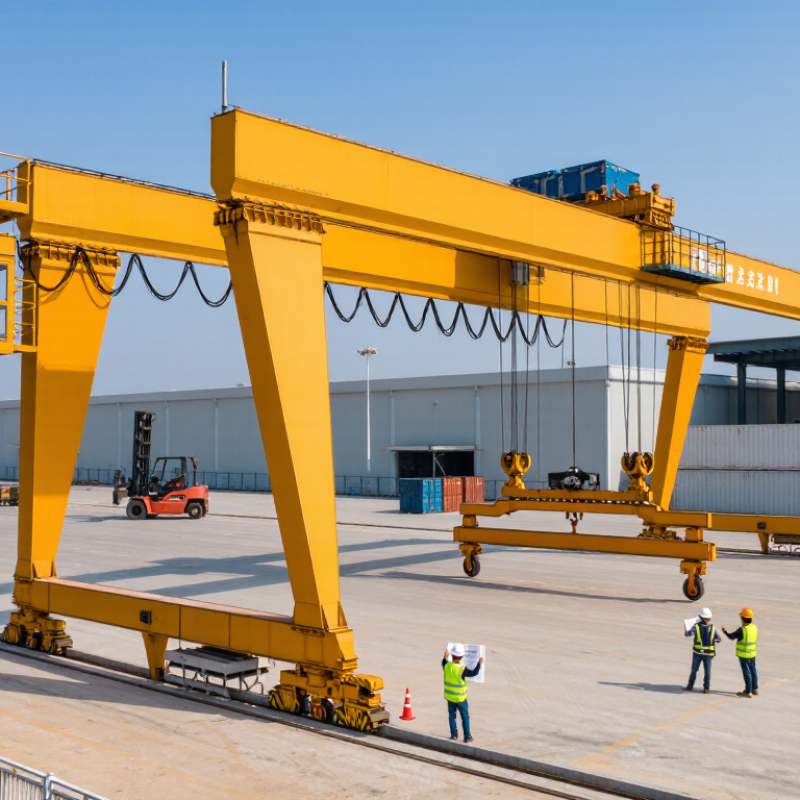
Why Choose MCDAL Crane for Global Buyers?

MCDAL Crane: Company Profile and Core Product Range

For global buyers, a crane supplier should be more than a product catalog. This company operates as an industrial lifting equipment manufacturer, supporting project planning, fabrication, inspection, and delivery. Its work covers workshops, warehouses, ports, and process facilities. Engineering decisions begin with load data, span, lifting height, duty class, power supply, and site conditions. Practical experience matters here. A small error in runway alignment can affect installation time and long-term maintenance.

Its core range includes single-girder and double-girder overhead cranes, gantry cranes, jib cranes, and electric hoists. The product line also includes wire-rope hoists, chain hoists, winches, end carriages, control panels, and replacement parts. Buyers can request variable-speed control, remote operation, enclosed cabins, anti-corrosion treatment, or different lifting capacities. Not every option suits every site. That should be stated clearly. Technical drawings, load charts, inspection records, manuals, and packing lists support communication across borders.

For overseas projects, reliability is built through traceable materials, documented testing, protective packaging, and responsive technical service. The company can coordinate drawings before production and provide installation guidance when local teams need support. Yet no supplier should promise perfection. Site measurements may change, and incomplete buyer data can create avoidable revisions. A careful review is still necessary. Buyers should compare duty ratings, safety devices, spare-parts access, warranty terms, and after-sales response before issuing a purchase order.


The chart compares typical maximum rated capacities across major crane categories used in construction, manufacturing, logistics, ports, and heavy industry. Actual capacity varies by configuration, span, duty class, and operating conditions.

Crane Manufacturing Standards, Technology, and Quality Control

Why Choose a Crane Manufacturer for Global Buyers?

Crane manufacturing should begin with standards, not catalog photos. ISO 4301 classifies crane duty by load spectrum and operating frequency, helping engineers match structure, motors, brakes, and controls to real working conditions. EN 13001 also guides limit-state design, including fatigue and stability. These details matter on a factory floor where a 20-ton load moves repeatedly above steel workstations.

Quality control must be visible. A reliable manufacturer records material certificates, weld procedures, welder qualifications, and dimensional checks. Non-destructive testing can reveal hidden weld defects before painting conceals them. Factory acceptance testing should verify rated-load lifting, emergency stops, limit switches, brake holding, and pendant or radio control response. Small records matter.

The ISO Survey 2022 reported 1,265,216 ISO 9001 certificates across 189 countries. Certification shows a management framework, but it does not automatically prove crane safety. That distinction is important. In the United States, the Bureau of Labor Statistics recorded 5,283 fatal occupational injuries in 2023 across all industries, reminding buyers that site risk remains broader than equipment design. Digital load monitoring, variable-frequency drives, and condition-based maintenance can improve control and reduce unnecessary stress. Yet software can fail. Sensors need calibration, backup procedures, and trained operators. A practical supplier shares inspection reports, spare-parts plans, manuals, and response times before shipment. Global compliance is not a slogan. It is a trail of evidence.

Customization Options for Different Global Lifting Applications

Global lifting projects rarely share the same geometry. A warehouse may need a compact electric bridge crane. A shipyard may require long spans, outdoor protection, and precise positioning. The Global Wind Energy Council reported 117 GW of new wind capacity in 2023. That expansion creates demand for lifting systems adapted to nacelles, towers, and maintenance areas.

Reliable customization begins with site facts, not a standard catalogue. Engineers review rated load, lifting height, span, duty cycle, travel speed, temperature, dust, and available power. Port applications require different priorities. UNCTAD’s Review of Maritime Transport 2024 reported that seaborne trade grew by 2.4% in 2023. Continuous handling may therefore demand high-duty motors, corrosion protection, remote diagnostics, and easier access for inspections.

Small details matter. Variable-speed control can reduce load swing near fragile equipment. Anti-collision functions help when several cranes share one runway. A sealed control enclosure may suit humid coastal air, while low-temperature lubrication supports northern sites. Compliance documents, load testing, operator training, spare-part planning, and clear manuals should be prepared with the equipment. A drawing can look complete and still miss a service platform or maintenance clearance. We have seen that happen. Early site measurements and realistic duty calculations prevent expensive changes later.

International Export Services, Compliance, and Customer Support

Choosing the right crane supplier means more than comparing prices. Export experience matters when equipment crosses borders, ports, and different inspection systems. Our team prepares commercial invoices, packing lists, certificates of origin, and technical files for each shipment. Every document should match the crane’s model, serial number, weight, and destination requirements.

Compliance begins before production ends. Engineers review load capacity, lifting height, power supply, and local operating conditions with the buyer. We check requested standards and identify documentation gaps early.

A missing serial number can delay customs clearance. A wrong voltage detail can create costly site problems. These details are not glamorous, but they protect the project.

Clear communication continues after dispatch. Buyers receive production updates, inspection photos, shipping information, installation guidance, and operating documents. Support can also include remote troubleshooting and spare-parts coordination. We do not pretend every shipment is simple. Weather, port congestion, and changing import procedures can affect schedules. That is why realistic timelines are more useful than confident promises. Our process still needs regular review, especially when a country changes its technical or customs requirements. Good export service is practical, traceable, and responsive from the first inquiry to safe crane operation.

Factors Global Buyers Should Consider Before Choosing MCDAL Crane

Global buyers should examine more than a crane’s price and lifting capacity. The supplier must understand local site conditions, working temperatures, floor strength, wind exposure, and power standards. Ask for clear load charts, engineering calculations, inspection records, and installation procedures. Vague documents create expensive risks later.

Reliable communication matters during every project stage. Check whether technical staff can answer questions in your time zone and explain problems in practical language. Review independent customer references, not only selected testimonials. A port project may need corrosion protection, while an indoor factory may require precise travel control and low headroom design. The same crane cannot suit every workplace.

After-sales support deserves close attention. Confirm spare-parts availability, technician response times, warranty limits, and operator training. Ask how remote troubleshooting works when production stops at night. Experienced buyers also compare delivery schedules with actual project deadlines. A short quoted lead time may hide approval delays, testing, or transport uncertainty. Be careful here.

Standards and documentation should match the destination market. Request evidence of material traceability, factory testing, electrical compliance, and final commissioning. Site visits can reveal workshop organization, welding quality, and inspection discipline. Still, no checklist is perfect. I would leave room for unexpected maintenance needs, because real working conditions often expose weaknesses that drawings cannot show.

Why Choose MCDAL Crane for Global Buyers? - Factors Global Buyers Should Consider Before Choosing MCDAL Crane

Evaluation Dimension What Global Buyers Should Check Relevant Data or Standard Recommended Selection Evidence
Lifting Capacity Confirm the safe working load for the heaviest planned lift, including lifting accessories and operating conditions. Rated capacity is normally stated in metric tonnes or kilograms and must not be exceeded during operation. Load chart, design calculations, test certificate, and clearly marked safe working load.
Span and Lifting Height Match the crane dimensions to the building width, runway layout, hook travel, roof structure, and required clearance. Span is commonly specified in metres; lifting height depends on hook travel and the available headroom. Approved layout drawing showing span, hook height, runway elevation, clearances, and maintenance access.
Duty Classification Evaluate lifting frequency, average load spectrum, operating hours, and the number of starts and stops. ISO 4301 classifies crane mechanisms according to utilization and load spectrum; FEM classifications are also widely used in Europe. Documented duty-class calculation rather than selection based only on maximum capacity.
Safety Compliance Identify the regulatory framework applicable at the installation site and verify that safety features are included. Common references include EN 15011, EN 13001, ASME B30.2, OSHA 1910.179, and applicable local regulations. Declaration of conformity where applicable, risk assessment, inspection records, and safety-device list.
Power Supply Compatibility Check voltage, frequency, phase configuration, control voltage, grounding method, and site-specific electrical requirements. Industrial power systems commonly use three-phase AC supplies; the exact voltage and frequency vary by country and facility. Electrical schematic, motor data sheets, protection settings, and confirmation of compatibility with the site supply.
Control and Automation Compare pendant, radio remote, cabin, variable-frequency drive, anti-sway, limit-control, and monitoring requirements. Variable-frequency drives can provide controlled acceleration and deceleration; required functions depend on the application and risk assessment. Functional description, control-circuit diagram, emergency-stop arrangement, and commissioning test results.
Environmental Conditions Assess indoor or outdoor use, dust, moisture, corrosive agents, temperature range, wind exposure, and hazardous areas. Ingress protection ratings are defined by IEC 60529; outdoor cranes may require weather protection and wind-related operating controls. Environmental specification, enclosure ratings, corrosion-protection system, and outdoor operating limitations.
Material and Surface Protection Review steel grades, weld quality, paint system, galvanizing requirements, and corrosion allowance. Coating selection should reflect exposure conditions; ISO 12944 is commonly used for corrosion-protection planning. Material certificates, welding procedures, inspection records, coating specification, and dry-film thickness records.
Testing and Inspection Ensure the crane is tested before delivery, installation, and handover, with traceable documentation. Typical checks include dimensional inspection, no-load testing, functional testing, braking tests, and rated-load testing where required. Factory acceptance test report, commissioning checklist, load-test record, and third-party inspection when required.
Installation and Commissioning Clarify responsibility for transport, unloading, assembly, runway alignment, electrical connection, testing, and operator training. Installation requirements depend on crane type, site access, building structure, and local legal requirements. Installation method statement, schedule, site-readiness checklist, training plan, and handover documentation.
Maintenance and Spare Parts Consider inspection intervals, wear parts, lubrication points, diagnostic access, and spare-part availability in the destination country. Maintenance frequency should follow the manufacturer’s instructions, duty classification, operating environment, and applicable regulations. Preventive-maintenance schedule, spare-parts list, troubleshooting guide, manuals, and service-support contacts.
Total Cost of Ownership Compare purchase price with shipping, installation, energy use, inspections, maintenance, downtime, and replacement parts. A lower initial price does not necessarily indicate a lower lifecycle cost; duty, utilization, and service access materially affect total cost. Itemized quotation, energy and maintenance assumptions, warranty terms, exclusions, and lifecycle-cost estimate.
International Logistics Verify packing method, shipping dimensions, lifting points, customs documents, delivery terms, and insurance responsibilities. Incoterms® define the allocation of costs, risks, and responsibilities between buyer and seller. Packing list, commercial invoice, certificate of origin where required, shipping marks, and agreed Incoterm.
Documentation and Communication Assess the completeness of technical drawings, manuals, certificates, translation quality, response process, and change-control procedure. Clear documentation reduces installation errors, supports inspections, and improves operator and maintenance training. Document register, approved drawings, multilingual manuals where needed, revision history, and defined technical contact.
Buyer note: Final crane selection should be based on a site-specific engineering review, the applicable local regulations, and documented verification of capacity, duty, safety, installation, and after-sales requirements.