How to Choose the Right 350 Ton Crane for Your Project?
Choosing the right 350 ton crane for your project is crucial. A well-selected crane can enhance efficiency and safety on the job site. However, the process can be challenging. Various factors must be considered. Understanding these factors requires experience and expertise.
When selecting a 350 ton crane, you should evaluate the project requirements. What is the load type? How high does it need to lift? These questions help narrow down options. Additionally, consider the terrain and weather conditions. A crane’s performance may vary under different circumstances. Reflecting on your project’s specific needs is vital.
Consulting with experts can provide insights. Their knowledge can guide you to the best choices. An experienced team can help avoid common mistakes. A tailored approach to crane selection ensures reliability and efficiency. Often, projects are derailed due to improper equipment choices. Focus on making informed decisions for a successful outcome.
Factors to Consider When Selecting a 350 Ton Crane for Construction Projects
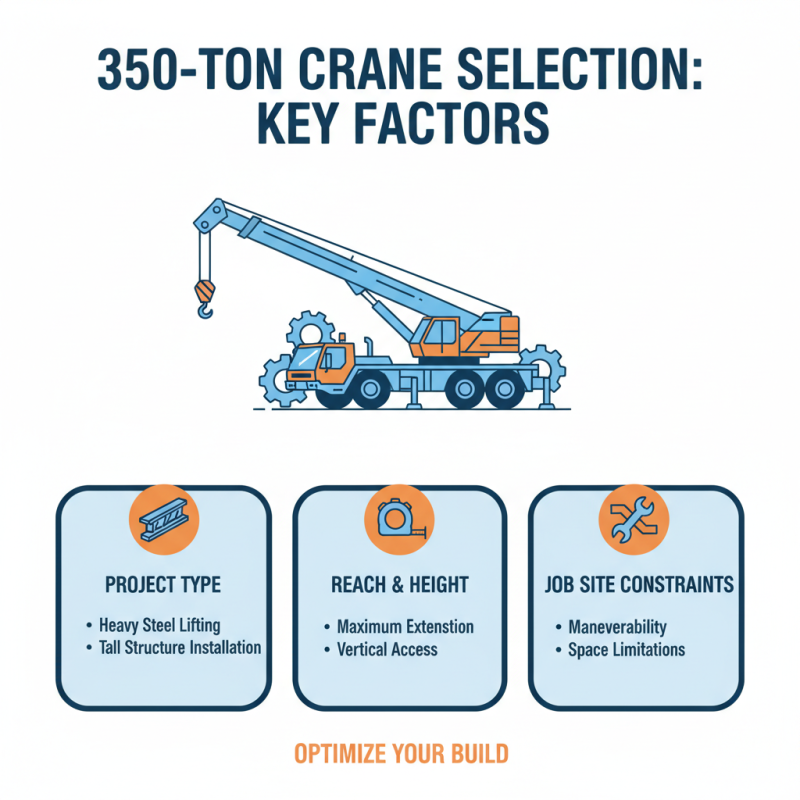
When selecting a 350-ton crane for construction projects, various factors must be considered. The project type significantly influences your choice. Are you lifting heavy steel beams or installing tall structures? Each task demands different capacities and features. Look at the crane's reach and height capability. Ensure it can easily maneuver within the job site constraints.
The terrain plays a crucial role as well. Uneven ground can challenge stability. In such cases, a crane with outriggers or a broad base may be necessary. Always assess the site conditions. For instance, nearby structures or overhead lines can restrict movement. It’s essential to evaluate these elements carefully.
Operator experience is another vital consideration. A well-trained operator maximizes efficiency and safety. Lack of experience can lead to mistakes. This could delay your project or result in injuries. Review the operator’s qualifications and training history. If needed, consider additional training sessions to enhance skills. Balancing all these factors will help ensure you choose the right crane, tailored to your specific project requirements.
Understanding the Load Capacity and Limitations of 350 Ton Cranes
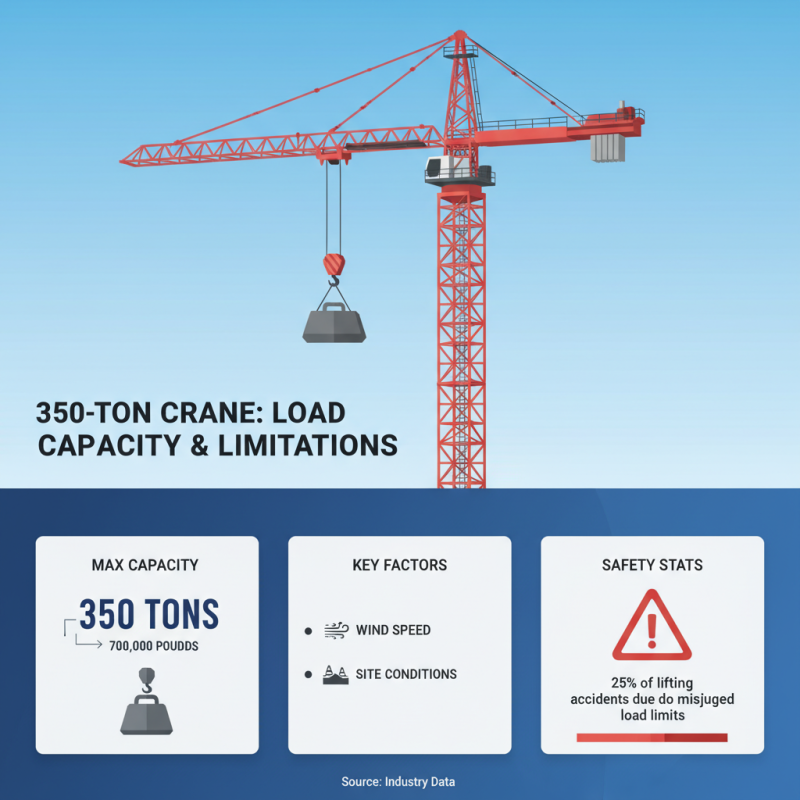
When selecting a 350-ton crane, understanding load capacity and limitations is crucial. A crane's load capacity indicates the maximum weight it can lift safely. For a 350-ton crane, this means it's designed to handle loads up to 700,000 pounds. However, this figure doesn't tell the whole story. Operators must consider dynamic factors such as wind speed and site conditions. Industry data reveals that nearly 25% of lifting accidents stem from misjudging load limits.
Load charts are vital. They provide specific guidelines for different configurations and lifting distances. For example, some models may only support full capacity at short boom lengths. Beyond that, the load capacity decreases significantly. According to the American Society of Mechanical Engineers, cranes operating at over 75% of their rated capacity should have a detailed safety analysis conducted.
Environmental factors also play a role. Ground conditions, weather, and rigging methods can all affect crane performance. Studies show that around 30% of incidents occur due to inadequate site assessments. Reflecting on these aspects ensures that safety remains a top priority when planning your project with a 350-ton crane. Proper training for operators is equally important. Experience shapes judgment, helping to avoid common oversights that could lead to accidents.
Key Features and Specifications of 350 Ton Cranes to Evaluate
When selecting a 350-ton crane, key features and specifications play a crucial role. Understanding the load capacity is fundamental. Cranes in this category typically lift up to 350 tons at a specific radius, often around 15 feet. Evaluating the boom length is essential; cranes usually feature booms ranging from 100 to 200 feet. This impacts how far you can reach and lift effectively.
Consider the operational height as well. Many 350-ton cranes can reach heights of around 250 feet, making them suitable for various projects. Stability is another vital aspect. Cranes equipped with advanced stabilization systems can prevent tipping, enhancing safety. According to a recent industry report, around 20% of crane accidents result from improper handling of load capacities. This emphasizes the need for reliable specifications.
Operator experience also greatly influences crane utilization. A sophisticated lifting mechanism may require trained personnel to operate efficiently. Many cranes come with hydraulic systems that provide smooth lifting motions. However, not every project uses these systems effectively. Poor communication on-site can lead to mishaps, even with powerful cranes. Choosing the right crane involves not just specifications, but evaluating overall project needs and operational practices.
Safety Regulations and Compliance for Operating a 350 Ton Crane
Operating a 350-ton crane is a significant responsibility. Safety regulations are critical for ensuring the well-being of everyone on site. Compliance with these regulations is not just about following rules; it’s about creating a culture of safety. Workers should be trained to recognize hazards and deploy safe practices when using heavy equipment.
Before operating a crane, check local regulations. Different regions have specific rules regarding crane operation. Ensure that operators possess necessary certifications. Regular inspections of the crane should be part of your routine. This guarantees that it operates safely and efficiently.
Tips: Always conduct a thorough pre-operation inspection. This includes checking for mechanical issues and ensuring load capacities are not exceeded. Be clear on signaling methods to prevent misunderstandings. Encourage crew members to voice concerns about safety without hesitation. Reflect on past experiences to identify areas for improvement. Every safety lapse can provide valuable lessons.
How to Choose the Right 350 Ton Crane for Your Project? - Safety Regulations and Compliance for Operating a 350 Ton Crane
| Feature |
Details |
| Maximum Load Capacity |
350 tons |
| Type of Crane |
Crawler Crane |
| Boom Length |
60 meters |
| Operational Radius |
40 meters |
| Safety Features |
Load Moment Indicator, Anti-Two Block System |
| Compliance Standards |
OSHA, ANSI, ISO 9001 |
| Operator Certification Required |
Yes |
| Inspection Frequency |
Monthly Inspection, Annual Load Testing |
| Weather Considerations |
Wind speed limits, Precipitation effects |
| Transport Dimensions |
Length: 14m, Width: 3m, Height: 4m |
Cost Analysis: Budgeting for a 350 Ton Crane Purchase or Rental
When budgeting for a 350-ton crane, understanding the costs involved is crucial. The purchase price can vary widely based on crane specifications. New cranes may start from several hundred thousand dollars, while used options can be more affordable. However, financing options often come with additional expenses like interest and maintenance. It's essential to consider these factors early in your planning process.
Rental might seem a cost-effective option. Renting eliminates long-term commitments and maintenance costs. Daily or monthly rental rates can vary depending on the crane's features and location. However, rentals may lack availability during peak seasons, leading to a potential scramble for resources. Weighing rental costs against project duration is necessary.
Reflect on your project’s unique needs. Do you require the crane only for a short period, or will it be integral for an extended phase? An impulsive rental can lead to budget overruns if not carefully planned. Establish a clear financial outline that considers all possible expenses. Doing so can significantly impact the overall success of your project.