Buying a large truck crane for international work is more than comparing lifting capacity and purchase prices. A machine may look impressive in a brochure, yet perform poorly on steep roads, dusty yards, or congested construction sites. Global buyers must connect technical specifications with real operating conditions, transport limits, local service access, and long-term ownership costs.
This guide introduces ten practical buying tips based on common equipment evaluation practices. It examines rated load charts, boom reach, chassis strength, hydraulic performance, operator visibility, fuel use, and safety features. Each detail matters. A 50-ton rating alone tells an incomplete story. Buyers should check the load radius, ground conditions, counterweight requirements, and stability during actual lifting operations.
Supplier credibility also deserves careful attention. Review factory records, inspection procedures, warranty terms, spare-parts availability, and training support. Ask for documented test results, not only polished photographs. An independent inspection before shipment can reveal oil leaks, damaged welds, unusual tire wear, or inaccurate instruments. Small problems become expensive across borders.
Regional conditions change the decision. Salt air can accelerate corrosion. Extreme heat can affect hydraulic seals. Remote projects may need stronger service planning. Import documentation and local equipment requirements should be confirmed with qualified professionals before purchase. Requirements differ.
No buying method is perfect. Even experienced teams can underestimate downtime, operator skill, or transport costs. That is why careful questioning remains valuable. A reliable decision combines engineering evidence, field experience, transparent communication, and realistic budgeting. The right large truck crane should not merely lift a heavy load; it should work safely, consistently, and economically throughout its expected service life.
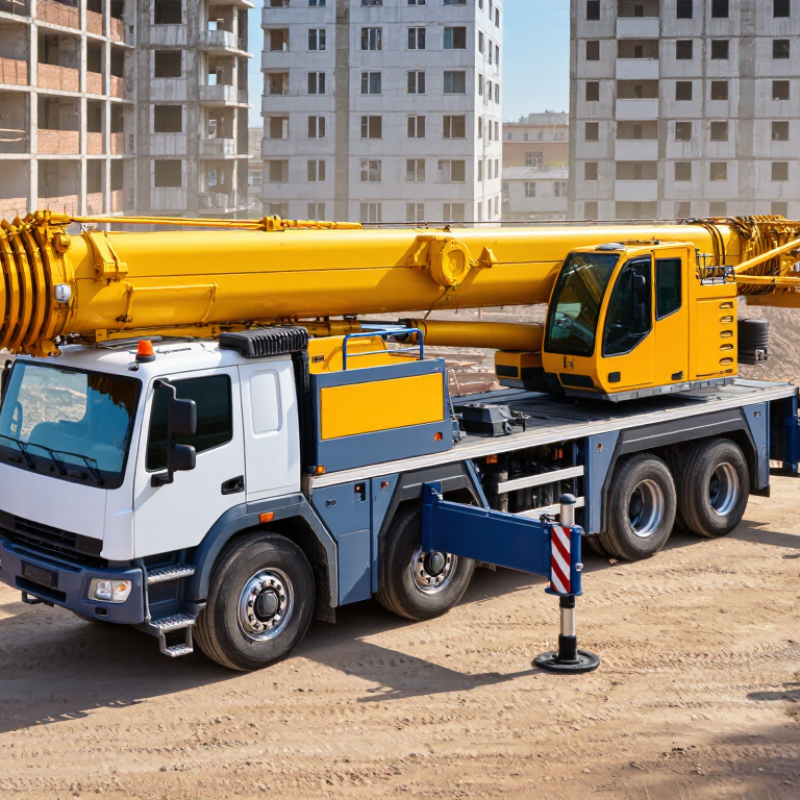
Before comparing large truck cranes, define the work in measurable terms. Record the maximum load, lifting height, working radius, and expected lifting frequency. A 40-ton load at a short radius can require a very different crane from a 15-ton load extended across a construction site. Include the load’s shape, center of gravity, and lifting points. Small details matter.
Study the operating ground carefully. Note soil strength, slope, access width, overhead clearance, and turning space. A crane that performs well on paved roads may struggle on loose gravel or wet clay. Check local weather patterns, including strong winds, heavy rain, and extreme temperatures. Wind can reduce safe lifting capacity, especially with large panels or suspended structures. Ask for verified load charts, outrigger reactions, inspection records, and maintenance procedures. Do not rely only on advertised maximum capacity.
Your project schedule also affects the specification. Frequent highway travel may require compact dimensions, reliable braking, and practical service access. Remote work may demand larger fuel capacity, durable tires, and simple diagnostic support. Confirm operator training requirements and transport regulations before placing an order. These conditions vary between countries and job sites. I have seen buyers focus on lifting capacity while overlooking setup time. That mistake becomes expensive quickly. Recheck the assumptions with an experienced lifting supervisor, because early estimates are often incomplete. There is room for correction.
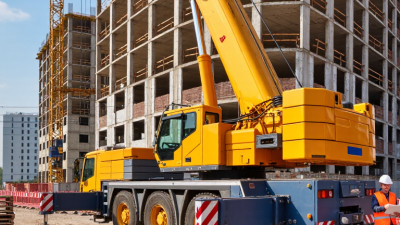
A truck crane is not simply a truck with a boom. Capacity, reach, and stability must match the worksite. The 2024 Global Mobile Cranes Market report by Fortune Business Insights estimated the market at about USD 19 billion in 2023, showing strong demand for adaptable lifting equipment. Yet market growth does not remove selection risks.
Compare truck-mounted, rough-terrain, and all-terrain configurations carefully. Truck-mounted cranes usually offer better road mobility and faster relocation between sites. Rough-terrain models suit uneven ground, but they often sacrifice highway speed. All-terrain units provide broader operating flexibility, although purchase and maintenance costs can rise.
Check rated capacity at the actual working radius, not only the headline tonnage. A 25-ton crane may lift far less at 20 metres.
Reach changes everything. A longer boom can improve access, but it can also reduce lifting capacity and increase tail swing. Review the load chart, outrigger footprint, counterweight requirements, and transport dimensions together. ISO 4301-1 crane classifications also help buyers compare duty cycles and expected utilization. Real projects are rarely perfect.
Inspect hydraulic response, chassis payload, axle limits, and cab visibility. Ask for documented test records and multilingual manuals.
Capacity claims without radius data are weak evidence. I would also leave a safety margin above the heaviest planned lift; early estimates are often wrong. A practical site trial may reveal more than a polished specification sheet.
Treat safety verification as a purchase requirement, not paperwork added after price negotiation. For lifting equipment, small omissions can become expensive. The ILO’s 2023 safety report estimated 2.93 million work-related deaths and 395 million non-fatal injuries worldwide in 2019. That figure is not crane-specific. It shows why documented controls matter.
Request the crane’s serial plate, rated-load chart, inspection history, maintenance records, and emergency procedures. Confirm testing covers the exact configuration, including boom length, counterweights, outriggers, and attachments. Ask an accredited third party to witness functional and proof-load tests under approved procedures. Do not treat a familiar certificate as universal approval. CE marking, UKCA, ASME, or national conformity documents may not satisfy the destination authority. Match the machine against standards such as EN 13000, ASME B30.5, or ISO 4309, then confirm local adoption.
Import checks can include HS classification, customs valuation, road-width limits, emissions, noise, insurance, and operator licensing. UNCTAD’s Review of Maritime Transport reports that ships carry over 80% of global merchandise trade by volume. Port delays still hurt. Verify import permits before shipment, and obtain written confirmation from customs or a qualified local consultant. One practical weakness remains: buyers often inspect the crane, but not the paperwork chain. That gap deserves attention.
| No. | Buying Dimension | What to Verify | Relevant Standard, Document, or Regulation | Practical Acceptance Check | Global Buyer Risk Reduced |
|---|---|---|---|---|---|
| 1 | Confirm the required lifting capacity | Check rated capacity at the intended boom length, working radius, counterweight configuration, outrigger position, and ground condition. Do not rely only on the maximum headline capacity. | Manufacturer load chart; applicable crane design and operation requirements, such as ASME B30.5 or EN 13000 where adopted. | Request load charts for every planned configuration and compare them with the heaviest load, lift radius, and site access limits. | Overloading, instability, rejected lifting plans |
| 2 | Verify structural and mechanical integrity | Inspect the boom, turntable, chassis, outriggers, pins, welds, hydraulic cylinders, wire rope, sheaves, hook block, and safety latches for damage, corrosion, leakage, or unauthorized repairs. | Inspection and maintenance procedures under ASME B30.5, EN 13000, ISO 9927, and the applicable national rules. | Obtain dated inspection records, repair history, non-destructive test reports where required, and clear photographs of critical components. | Hidden fatigue, premature failure, unplanned repairs |
| 3 | Check the safety-control system | Confirm that the crane has a functioning rated-capacity limiter or load-moment indicator, hoist limit devices, boom angle and length indicators, emergency stop controls, alarms, and outrigger interlocks where required. | Applicable local occupational-safety rules; ASME B30.5; EN 13000; electrical and control-system requirements specified for the destination market. | Perform a witnessed functional test and request calibration certificates with instrument serial numbers and expiry or review dates. | Operator error, overload incidents, non-compliance |
| 4 | Validate the chassis and road-legal configuration | Compare gross vehicle weight, axle loads, dimensions, turning radius, braking performance, lighting, steering, tire ratings, and road travel speed with destination-country limits. | Destination-country vehicle type-approval, roadworthiness, axle-load, lighting, braking, and oversize-transport requirements. | Obtain a dimensional drawing, axle-load statement, vehicle conformity documents, and confirmation of any escort or route permits required. | Port delays, registration refusal, route restrictions |
| 5 | Request complete certification evidence | Confirm the exact machine identification, serial number, rated capacity, operating instructions, risk assessment, declaration of conformity where applicable, and inspection or test certificates. | For the European market, verify applicable CE obligations and the relevant machinery legislation; for other markets, verify the national conformity-assessment route. | Match every certificate to the machine nameplate and serial number. Reject generic certificates that do not identify the supplied crane. | Customs holds, workplace-use prohibition, legal liability |
| 6 | Review lifting accessories and attachment compatibility | Verify the hook, hook block, shackles, slings, spreader beams, auxiliary winch, jib, and other attachments have compatible rated capacities and connection dimensions. | Applicable lifting-accessory requirements; relevant EN, ISO, ASME, or national standards adopted in the operating country. | Check markings, certificates, proof-test records, wear limits, and whether accessory weight is included in the load chart. | Dropped loads, incompatible equipment, invalid lift plans |
| 7 | Confirm environmental and operating suitability | Assess temperature range, wind limits, altitude, dust, humidity, corrosion exposure, electrical hazards, noise limits, and ground-bearing pressure for the intended sites. | Manufacturer operating limits; local environmental, electrical-safety, emissions, and occupational-health requirements. | Request wind-speed limits, ground-pressure data, fluid specifications, cold-start provisions, and corrosion-protection details. | Reduced capacity, equipment damage, unsafe site operation |
| 8 | Calculate import classification and landed cost | Budget the purchase price, inland transport, ocean freight, insurance, customs duty, value-added or sales tax, port fees, inspection charges, registration, and local modifications. | The HS heading for cranes is generally 8426, while the exact subheading depends on crane type and the importing customs authority's classification decision. | Obtain a written tariff ruling or broker confirmation before shipment; verify origin, customs value, invoice, packing list, and transport documents. | Unexpected taxes, incorrect declaration, clearance delays |
| 9 | Check emissions and hazardous-material requirements | Identify the engine-emission stage, fuel type, noise level, battery requirements, refrigerants, lubricants, and any fluids or components subject to transport controls. | Destination-country non-road or road-engine emission rules; dangerous-goods transport rules where batteries, fluids, or other regulated materials apply. | Request engine emission certificates, fuel-system information, safety data sheets, and shipping instructions for batteries and fluids. | Import rejection, environmental penalties, restricted site access |
| 10 | Secure training, service, and warranty support | Confirm operator and maintenance training, spare-parts availability, diagnostic support, response times, warranty scope, service intervals, and technical-document language. | Local crane-operator licensing and inspection rules; manufacturer maintenance schedule; applicable national workplace-safety requirements. | Include training records, parts lists, manuals, service procedures, warranty terms, and acceptance testing in the purchase contract. | Long downtime, unsafe maintenance, warranty disputes |
Note: Standards, certification procedures, tariff classifications, emissions limits, and road regulations vary by destination country and may change. Confirm the current requirements with the importing customs authority, road-transport authority, workplace-safety regulator, and a qualified local inspector before purchase and shipment.
When buying a large truck crane, assess the manufacturer beyond catalog claims. Request factory audit records, load-test procedures, welding qualifications, and parts traceability. The ISO Survey 2023 recorded 1,265,216 ISO 9001 certificates worldwide, but certification alone does not prove crane reliability. Ask for recent inspection results, failure statistics, and corrective-action records from comparable models.
Product quality appears in details. Check boom deflection, hydraulic temperature, outrigger stability, control response, and corrosion protection. Request independent test reports covering rated load, fatigue cycles, braking, and emergency lowering. A 2023 World Bank Logistics Performance Index report evaluated 139 economies and highlighted reliability as a major logistics factor. Delayed repairs can damage that reliability quickly. It happens.
Warranty terms require careful reading. Confirm coverage periods for the boom, chassis, hydraulic pump, electronic controls, and structural welds. Check whether labor, travel, seals, and replacement freight are included. Ask about exclusions for harsh climates, salt exposure, and multi-shift operation. A long warranty sounds impressive, yet weak documentation can make it difficult to claim.
After-sales support should be measurable. Request response-time targets, technician locations, critical-parts inventory, service training, and multilingual manuals. The manufacturer should provide maintenance intervals based on operating hours, not vague calendar promises. Speak with two existing users in your region. Their repair history may reveal more than polished demonstrations. I would also price three years of filters, hoses, sensors, and planned inspections. Buyers often undercalculate downtime.
Recommended evaluation weighting for comparing manufacturers, product quality, warranty, and after-sales support
Product quality and safety compliance should receive the highest priority, followed by lifting performance, lifecycle cost, and after-sales support. Buyers should verify load charts, stability data, applicable certifications, spare-parts availability, technician response times, warranty terms, and operator training before placing an order.
A large truck crane’s purchase price is only the visible cost. Fuel, tires, insurance, operator training, repairs, financing, and resale value shape the real budget. The U.S. Energy Information Administration reported average on-road diesel prices of about $3.76 per gallon in 2024. Local fuel prices may be far higher. Build a three-year cost model using expected annual hours, fuel consumption, service intervals, import duties, and currency changes. Use conservative assumptions. Optimistic estimates often fail during the first major repair.
Tip: Request a written total-cost worksheet from the seller. Check engine hours, lifting history, maintenance records, warranty limits, and spare-part delivery times. A professional inspection should follow ISO 9927-1 principles and local lifting regulations. During pre-delivery inspection, examine welds, hydraulic hoses, outriggers, tires, brakes, boom sections, load charts, emergency stops, and safety alarms. Test the crane under controlled loads, not only while parked.
The International Labour Organization estimates 2.78 million workers die annually from work-related causes, highlighting the importance of disciplined equipment checks. Still, paperwork can look better than reality. I would photograph every component, record hydraulic pressure, and compare serial numbers with the contract. Ask an independent inspector to review hidden corrosion and previous structural repairs. Small leaks are easy to dismiss. They should not be. A missed defect can consume the savings from a lower purchase price.