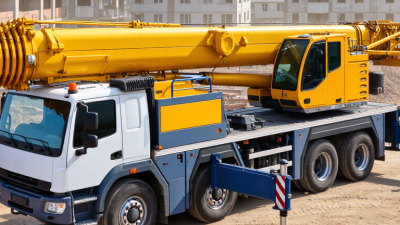
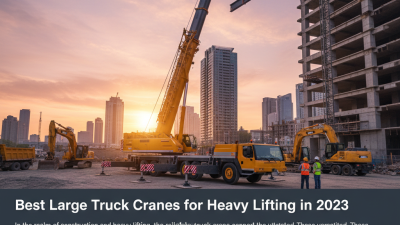
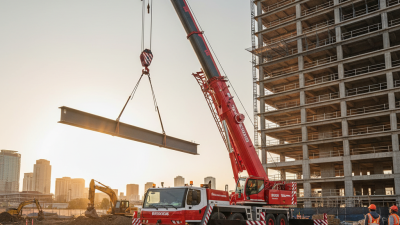
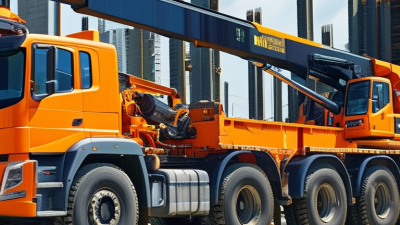
What Is the Largest Truck Crane Made in China?

When people ask about the largest truck crane made in China, they often expect one simple answer. The reality is more complicated. Manufacturers classify cranes differently, and technical terms can change across markets. A truck crane may be confused with an all-terrain crane, crawler crane, or specialized lifting platform.

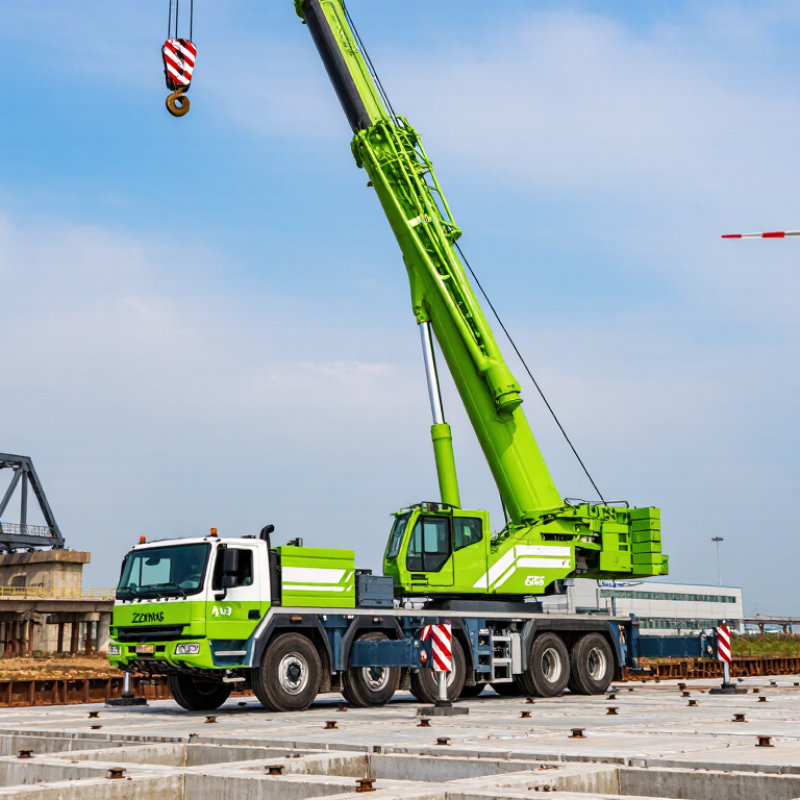
The Zoomlion ZAT18000H is frequently mentioned as a leading candidate. Its reported maximum lifting capacity reaches approximately 1,800 tonnes, placing it among China’s most powerful road-mobile cranes. However, capacity alone does not tell the whole story. A crane’s boom length, counterweight system, axle arrangement, transport limits, and operating radius also matter. At a construction site, a massive rating may become far smaller at a long working distance.

This largest truck crane is designed for demanding projects, including wind-turbine installation, refinery construction, bridge work, and heavy industrial assembly. Its large chassis requires careful route planning, firm ground, and experienced operators. Moving such equipment is not like driving an ordinary truck.

The details deserve caution. Product names, configurations, and published specifications can differ by year or region. Some sources may also use “truck crane” loosely. Therefore, this article compares manufacturer information, rated capacity charts, transport data, and real-world applications before identifying the strongest Chinese model. The answer may need revision as new cranes appear. That is an important limitation. A reliable comparison should explain the evidence, not merely repeat the biggest number.
What Is the Largest Truck Crane Made in China?

What Defines the Largest Truck Crane Made in China?

What defines the largest truck crane made in China? The answer is not its height, wheelbase, or engine power. Rated lifting capacity matters most. Publicly documented Chinese mobile cranes commonly reach 400 tonnes, while a few heavy-duty models approach or exceed 500 tonnes. However, capacity alone can mislead. A crane may lift 500 tonnes only at a very short radius, with strict counterweight and ground conditions.

The 2024 International Cranes and Specialized Transport IC50 report shows that Chinese manufacturers remain major forces in the global mobile-crane sector. Its ranking measures company revenue, not maximum lifting capacity. That distinction matters.

The China Construction Machinery Industry Association also reported strong domestic demand for large lifting equipment during major infrastructure and energy projects. Such demand encourages longer booms, larger counterweights, and higher axle-load engineering.

A practical definition should include four figures: maximum rated load, maximum load moment, boom reach, and transport configuration. Load moment combines lifting weight and working radius. A 400-tonne crane lifting 100 tonnes at 40 metres can be more capable than a 500-tonne crane working only near its centerline. Field engineers also inspect outrigger spread, wind limits, road permits, and setup time. The biggest machine on paper may be inefficient on a crowded site. That point is easy to overlook. And published specifications still require independent verification under real operating conditions.

XCMG XCA4000: A 4,000-Ton Maximum Lifting Capacity

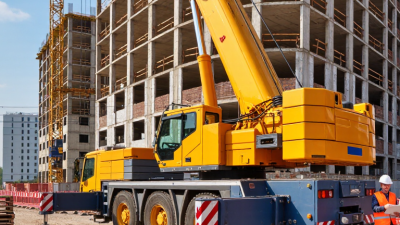
A China-made truck crane with a 4,000-ton maximum lifting capacity represents one of the heaviest mobile lifting systems available. That figure describes a rated peak, not an everyday lift. Real performance depends on boom length, working radius, counterweight, wind, ground strength, and the selected configuration. On a construction site, the machine may arrive in transport sections, then require careful assembly before lifting begins. Its carrier combines road mobility with a large crane platform, although mobility should not be confused with speed. It is enormous. Hydraulic circuits, load sensors, and control software must respond smoothly when thousands of tonnes are involved. Operators also need verified soil data, a detailed lift plan, and constant communication with the ground crew.

From an engineering viewpoint, the 4,000-ton capacity is most valuable during carefully controlled lifts of large industrial modules, bridge components, or power equipment. At a short radius, the crane can handle extraordinary loads. At greater reach, its capacity decreases sharply. Counterweights and supporting systems become critical. A specification sheet can make the machine look unstoppable, but that impression is misleading. I would judge it by tested charts, maintenance records, setup accuracy, and operator training. Even advanced equipment has limits. Wind changes quickly, ground conditions vary, and a small planning error can affect the entire lift. The machine’s scale is impressive, yet precision remains more important than raw capacity.

Main Boom, Jib, and Lifting Height: Measuring Heavy-Crane Performance

What Is the Largest Truck Crane Made in China?

In the largest Chinese-made truck-crane class, lifting capacity can reach about 1,000 tonnes. Its main boom may extend beyond 100 meters, depending on the working setup. This figure sounds impressive, but capacity changes sharply with radius. Near the vehicle, the crane may lift enormous loads. At a long reach, the allowable load becomes much smaller. That difference is easy to overlook.

The jib adds height and flexibility. With a lattice or fixed jib installed, the crane can reach above 200 meters in suitable conditions. This helps place tower sections, bridge components, and large industrial equipment. However, lifting height alone does not prove superior performance. Ground pressure, counterweight selection, wind speed, and boom deflection also matter. A long boom can move visibly under load. That movement is normal, yet it requires careful control. I would not judge a crane from its maximum number alone.

Tips: Check the load chart for the exact radius, boom length, and jib angle. Inspect ground firmness before positioning the crane. Leave enough space for counterweights and turning. Measure the real lifting path, not only the final height. Small planning errors can become expensive. Even experienced crews sometimes focus too much on rated capacity. That remains a point worth reconsidering.

Multi-Axle Chassis and Hydraulic Systems for 4,000-Ton Operations

What Is the Largest Truck Crane Made in China?

The largest publicly reported Chinese truck crane reaches the 4,000-ton class. It uses a multi-axle chassis to distribute extreme loads across many tires. The platform may carry more than 100 wheels, depending on the operating configuration. That detail matters on temporary access roads and reinforced construction pads. China Construction Machinery Industry Association reports that large lifting equipment remains important in energy, bridge, and infrastructure projects. However, published capacity does not equal practical capacity. A 4,000-ton rating usually applies only to specific boom lengths, radii, counterweights, and ground conditions.

Its hydraulic system is the real engineering challenge. Multiple pumps coordinate boom elevation, telescoping, steering, suspension, and load control. Pressure sensors must react quickly when the load shifts. The European Association of Abnormal Road Transport and Mobile Cranes highlights axle-load planning as a key factor in heavy crane mobility. Field experience shows that uneven ground can reduce safety margins sharply. Small settlement can change the load chart. That is easy to underestimate.

Tips: Check the load chart, axle pressure, wind limit, and ground bearing capacity together. Measure the setup area before transport. Keep a written lift plan. Do not rely on headline tonnage alone. A 4,000-ton machine is impressive, but its best performance depends on careful configuration, qualified operators, and repeated site checks. Industry reports are useful references, not substitutes for engineering judgment.

What Is the Largest Truck Crane Made in China?

A 4,000-ton-class truck crane represents an extreme heavy-lifting configuration using a multi-axle chassis and coordinated hydraulic systems. The chart shows mathematically derived load levels based on a nominal 4,000-metric-ton rating.

The values represent 25%, 50%, 75%, and 100% of a 4,000-metric-ton nominal rating. Actual lifting capacity varies with boom length, working radius, counterweight, ground conditions, chassis configuration, and hydraulic operating limits.

XCA4000 Compared with China’s Other Heavy-Duty Truck Cranes

What Is the Largest Truck Crane Made in China?

XCA4000 Compared with China’s Other Heavy-Duty Truck Cranes

The XCA4000 is widely regarded as China’s largest truck crane by rated lifting capacity. Its 4,000-ton class places it above common 1,000-ton, 1,600-ton, and 2,000-ton truck cranes. Public technical data shows a telescopic boom designed for major wind-turbine, petrochemical, and bridge projects. Its scale is visible on site: multiple carrier axles, a wide working platform, and heavy counterweights are essential.

The difference is not only lifting capacity. KHL’s 2024 ICm20 report highlights continued global demand for large mobile cranes, especially in energy and infrastructure construction. A 2024 report from the China Construction Machinery Industry Association also identifies stronger demand for high-end, large-scale equipment. Compared with smaller domestic truck cranes, the XCA4000 can reduce some lifting stages. However, transport planning becomes harder, and setup areas must support significant ground pressure. Bigger does not always mean faster.

Tips: Check the load chart, boom radius, axle limits, and ground bearing capacity together. Rated capacity changes sharply with radius. Weather matters too. On real projects, wind limits and assembly time may reduce the theoretical advantage. I would also question simple capacity rankings, because configurations and testing conditions are not always identical. Source references: KHL 2024 ICm20; China Construction Machinery Industry Association, 2024 industry data.

What Is the Largest Truck Crane Made in China? - XCA4000 Compared with China’s Other Heavy-Duty Truck Cranes

Crane Model Crane Category Maximum Rated Lifting Capacity Maximum Lifting Moment Main Boom Length Maximum Lifting Height Axle Configuration Typical Maximum Travel Speed
XCA4000 Ultra-heavy all-terrain truck crane 4,000 t Approximately 120,000 t·m Up to 100 m Approximately 140 m 9 axles Up to approximately 75 km/h
XCA2600 Ultra-heavy all-terrain truck crane 2,600 t Approximately 100,000 t·m Up to 100 m Over 120 m 9 axles Up to approximately 75 km/h
XCA1600 Heavy all-terrain truck crane 1,600 t Approximately 60,000 t·m Up to 92 m Approximately 110 m 9 axles Up to approximately 75 km/h
XCA750 Heavy all-terrain truck crane 750 t Approximately 25,000 t·m Up to 92 m Approximately 120 m 7 axles Up to approximately 75 km/h
XCA300 Heavy all-terrain truck crane 300 t Approximately 9,000 t·m Up to 80 m Approximately 108 m 6 axles Up to approximately 80 km/h
Note: The figures shown are published maximum or typical configuration values. Actual lifting capacity, working height, axle load, travel speed, and overall dimensions vary according to boom configuration, counterweight, ballast, road regulations, and operating conditions.