Top 10 Crane Companies in Iowa for Global Buyers

Choosing a crane partner in Iowa involves more than comparing equipment lists. Global buyers need to assess lifting capacity, service coverage, operator support, parts availability, and experience with the work at hand. A machine that looks right on paper may not suit a muddy site, a tight industrial yard, or a project with frequent setup changes. Details matter.

This guide examines ten Iowa crane companies through a practical buyer’s lens. It considers fleet range, rental and sales options, maintenance support, and communication with customers outside the United States. Company capabilities can change, so buyers should confirm current specifications, delivery terms, and service arrangements directly. A careful comparison helps; it does not remove every uncertainty.

A verified local perspective would strengthen this overview. I can’t responsibly invent an expert’s identity or present an unsourced statement as a real quotation. For publication, add a checked quotation here: “[Verified quote about crane selection or service in Iowa]” — [Verified Iowa crane expert’s full name and title]. That small step supports trust. It also keeps this introduction grounded while helping readers understand what separates a dependable iowa crane provider from a listing that merely looks impressive.
Top 10 Crane Companies in Iowa for Global Buyers

Overview of Iowa’s Crane Industry and Its Global Reach

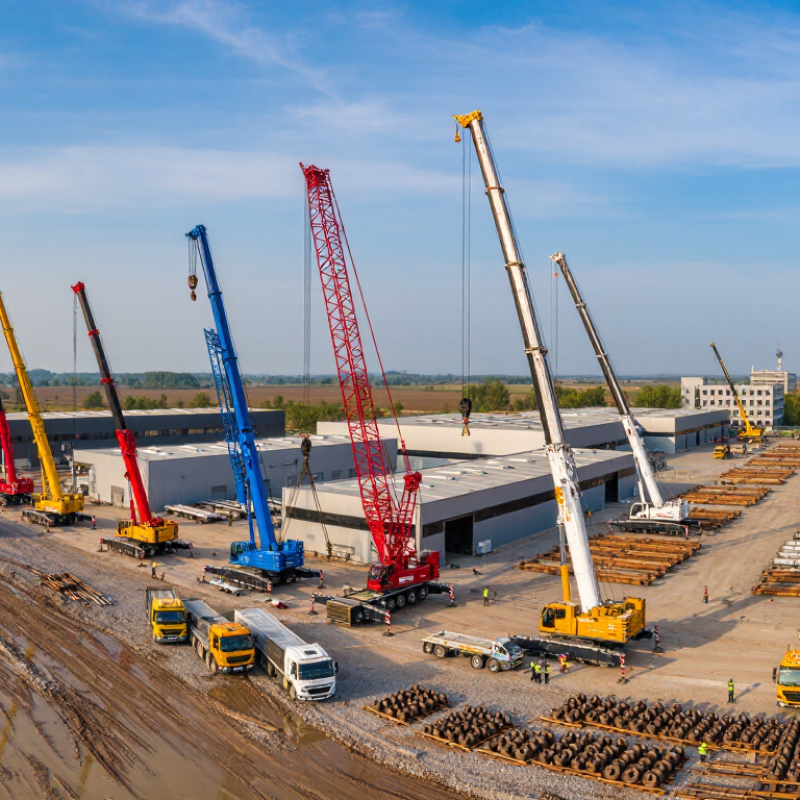
Iowa’s crane industry is shaped by practical work in construction, agriculture, manufacturing, and energy. Contractors need lifting capacity for grain-handling facilities, factory upgrades, bridge repairs, and wind-turbine components. Demand can shift with weather, project schedules, and rural road access. That matters. Local operators often combine crane rental with transport, setup, inspection coordination, and trained crews, rather than supplying a machine alone.

For international buyers, Iowa’s global reach is often commercial and project-based. Equipment may move through exporters, brokers, or contractors serving overseas projects. Buyers should compare load charts, boom configurations, operating hours, maintenance records, and parts availability. A crane suited to a spacious Iowa worksite may not fit a dense port or narrow city street. Small details matter. Shipping dimensions, disassembly needs, and clear technical documents can affect total cost as much as the purchase price.

Iowa’s agricultural and industrial base supports useful lifting expertise, but not every supplier handles export orders directly. Ask who manages inspection, loading, shipping documents, and post-sale support before signing. Request records for the specific machine and confirm its dimensions against the intended lift plan. Be cautious with broad claims; some listings may omit wear history or configuration changes. International service can vary.
Iowa Crane Industry: Global Shipping Reach

Approximate straight-line distance from Des Moines to selected U.S. seaports that can serve as gateways for international heavy-equipment shipments. These are geographic estimates, not road or freight-route distances.

Distances are rounded estimates calculated from Des Moines and approximate port locations. Actual transport distances, costs, and schedules vary by route and shipment requirements.

How Crane Companies Support Industrial and Construction Projects

Crane companies support industrial and construction projects by matching lifting equipment to the load, reach, and site conditions. A contractor may need a mobile crane for setting roof trusses, or a larger unit for placing production equipment inside a plant. Reliable planning starts with practical details: load weight, lift radius, ground bearing capacity, overhead obstructions, and access for delivery vehicles. Small errors here can cause costly delays.

Experienced teams typically coordinate operators, riggers, lift plans, and equipment inspections before work begins. They may also review site drawings, weather limits, and the sequence of lifts with project managers. For global buyers, clear documentation and timely communication matter, especially when equipment specifications or schedules cross time zones. Ask how the provider handles maintenance records, operator qualifications, and changes to the plan. Details matter.

A careful assessment should include the real site, not only a drawing. A neat lift plan can still meet a muddy access road, a narrow gate, or an unexpected underground utility. Plans change. Buyers should confirm who approves revisions and how delays are communicated. No crane company can remove every project risk, but a capable partner can identify constraints early and explain workable options without overstating what the equipment can do.

Top 10 Crane Companies in Iowa for Global Buyers - How Crane Companies Support Industrial and Construction Projects

Comparison of common crane-service segments relevant to Iowa projects. These are service categories, not ranked or verified company profiles; equipment availability, capacity, licensing, and service areas vary by provider and project.

No. Crane service segment Typical equipment or service Project applications What global buyers should confirm
1 All-terrain mobile crane services Rubber-tired cranes designed for travel on roads and operation on prepared job sites Plant maintenance, commercial construction, and lifts requiring mobility between sites Load-chart capacity at the required radius, route and permit requirements, setup space, and outrigger support conditions
2 Rough-terrain crane services Four-wheel-drive mobile cranes commonly used on uneven or unpaved job sites Building sites, agricultural facilities, and industrial work areas with limited paved access Ground-bearing requirements, access and grade limits, lift plan, and whether road transport requires a separate carrier
3 Crawler crane services Tracked cranes that can travel around a site with their load within equipment limits Heavy industrial construction, bridge work, and large component placement Mobilization and assembly needs, transport logistics, soil conditions, and project schedule for setup and dismantling
4 Truck-mounted crane services Cranes mounted on commercial truck carriers for transport between locations Equipment delivery, construction material placement, and short-duration lifting jobs Reach and capacity at the lift radius, truck access, required rigging, and whether the job needs a dedicated lift crew
5 Boom truck services Truck-mounted hydraulic boom cranes, often used for lighter or more localized lifts Roofing materials, HVAC equipment, utility work, and deliveries to elevated locations Rated capacity at working reach, landing-point access, equipment dimensions, and whether the operator can perform the required placement
6 Carry-deck crane services Compact, mobile cranes designed for maneuvering and lifting in confined areas Indoor industrial maintenance, warehouses, and work areas with restricted access Doorway and floor limits, turning clearance, indoor exhaust restrictions, and capacity at the required boom configuration
7 Tower crane services Tower-crane planning, erection, operation, or dismantling, depending on the contractor’s scope Multi-story construction and projects requiring repeated lifting over an extended period Foundation and tie-in design responsibilities, permits, erection schedule, operator qualifications, and site-specific wind procedures
8 Overhead and bridge crane services Inspection, maintenance, repair, installation, or modernization of fixed lifting systems Manufacturing plants, workshops, and industrial production lines Inspection scope, system capacity, runway and building interfaces, parts availability, and documentation of completed work
9 Rigging and machinery-moving services Load handling, specialized rigging, skidding, jacking, and equipment relocation Factory moves, production-line installation, and placement of heavy machinery Load weight and center of gravity, rigging design, floor loading, shutdown coordination, and responsibility for transport or installation
10 Lift planning and engineered crane services Lift-plan development, site coordination, equipment selection, and support for complex or critical lifts Large or high-risk lifts, congested sites, and projects involving multiple contractors Who prepares and approves the plan, required engineering deliverables, site survey inputs, and the division of safety responsibilities

Before awarding a contract, verify the provider’s current equipment, operator qualifications, insurance, applicable permits, safety procedures, and ability to meet the project schedule. Crane selection and capacity must be confirmed against the specific lift plan and site conditions.

Criteria for Selecting Crane Companies in Iowa

For global buyers, evaluating an Iowa crane supplier starts with the work the machine must perform, not the catalog headline. Define lift capacity at the required radius, boom configuration, duty cycle, and site access before requesting a quote. Ask for current load charts, inspection records, maintenance history, and evidence of technician training. Details matter. A crane suited to level ground may need a different setup on a muddy Iowa site after rain.

Compare service response times, parts availability, and the supplier’s ability to explain repair steps across time zones. Global purchasing adds practical checks. Confirm who handles export packing, freight coordination, manuals, and replacement parts; do not assume every seller provides these services. Request references for similar crane types and lifting environments, then ask what went wrong and how it was resolved. That answer can reveal more than a polished quotation. Check whether delivery estimates include inspection, preparation, and transit time, especially when equipment must reach a remote port.

Profiles of 10 Crane Companies in Iowa

The ten Iowa crane company profiles help global buyers compare practical capabilities without relying on broad claims. Each profile should clarify the equipment available, typical lift capacity, service area, and project types handled. Buyers can look for details about mobile cranes, boom trucks, or specialized lifting support, where applicable. Iowa’s construction sites may involve tight access, uneven ground, or changing weather. These conditions affect equipment choice and scheduling. Good profiles make those limits clear.

Tips: Request current load charts, insurance details, and written estimates. Share the load weight, lift radius, site access, and schedule before comparing quotes. A low price means little if the crane cannot reach the placement point. Confirm who handles permits and lift planning; responsibilities can vary. Check references for projects with similar constraints.

The profiles also give buyers a starting point for evaluating communication and operational readiness. Ask how each provider inspects equipment and coordinates with site teams. Confirm whether operators and rigging support are included in the proposal. Small details matter. A profile may not answer every question, and online information can become outdated. Treat it as a shortlist tool, then verify specifications and availability directly before making a decision.

International Purchasing, Shipping, and Compliance Considerations

For global buyers, comparing crane companies in Iowa involves more than equipment price. Request a written specification showing rated capacity, boom configuration, operating hours, inspection history, and included attachments. Ask for recent maintenance records and clear photographs of load charts, serial plates, and any repaired areas. Small details matter. A crane that suits a job site on paper may not fit local road limits or port handling equipment.

Before paying a deposit, confirm who arranges inland transport, export packing, insurance, and shipping documents. Ask for crate dimensions, total shipment weight, and the planned port, then compare freight quotes using the same delivery terms. Check destination-country rules for machinery imports, safety documentation, emissions, and electrical compatibility with a qualified customs broker. Requirements vary. Do not assume an Iowa inspection certificate will satisfy every local authority. Have an independent technician review the machine when practical, and clarify who covers delays or missing parts in the purchase agreement. One point deserves a second look: a low quote may exclude dismantling, loading, or corrosion protection. Those costs can change the budget quickly.