Choosing a state crane supplier in 2026 requires more than comparing hourly rates or browsing polished websites. The right supplier should understand your lifting environment, local requirements, equipment limits, and maintenance pressures. A warehouse expansion may need an overhead crane with precise positioning. A bridge project may require mobile lifting equipment, detailed ground assessments, and dependable field support. Small details matter.
David Duerr, a respected crane engineering consultant and author, once stated, “A crane is only as safe as the people who plan, operate, and maintain it.” That principle should guide every supplier evaluation. Ask who inspects the equipment, how often technicians receive training, and whether service records are available. Request evidence of relevant experience, insurance, certification, and documented safety procedures. A trustworthy state crane supplier should explain capacity charts clearly, identify operating risks, and recommend equipment based on your application rather than sales targets.
Experience deserves close attention. Visit a service facility if possible. Look at spare parts, inspection tools, and technician organization. Speak with previous customers about response times during breakdowns. Ask what happens after installation. That answer can reveal more than a brochure.
Not every supplier will meet every need. That is easy to overlook. Price still matters, but the lowest quote may hide slower repairs, unclear exclusions, or unsuitable equipment. Consider total ownership cost, operator training, inspection planning, availability, and communication. A strong choice may feel less exciting, yet it should remain reliable when the load is suspended, weather changes, and production cannot stop.
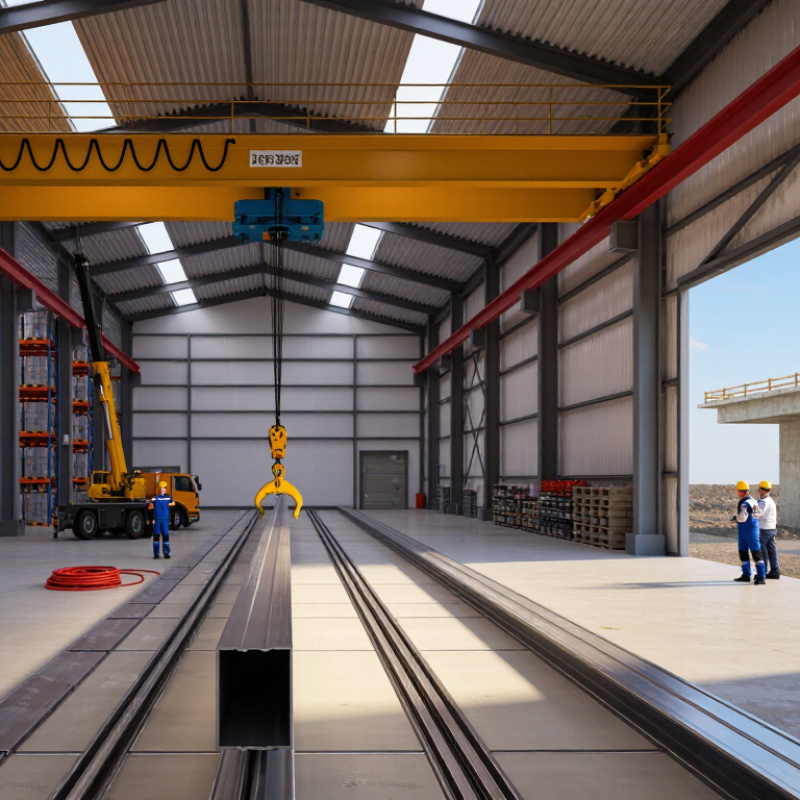
How to Choose a State Crane Supplier in 2026?
Define Your Crane Requirements and Project Scope
Before contacting a state crane supplier, describe the work clearly. Record the maximum load, lifting height, span, travel distance, and lifting frequency. Include load shapes, attachment points, and required positioning accuracy. A 10-ton load is not enough information. Its center of gravity matters too.
Inspect the jobsite before requesting a quotation. Measure building clearances, runway length, floor capacity, access routes, and available power. Note temperature, dust, moisture, and outdoor exposure. These details influence crane design, controls, maintenance, and installation planning. Experienced suppliers should review drawings, ask practical questions, and provide documented calculations. Request evidence of relevant projects, inspection procedures, technician qualifications, and after-sales response times. Check whether the proposed equipment meets applicable safety requirements in your location.
Tips: Create a one-page project brief. Add operating hours, target installation date, expected service life, and future expansion plans. Ask for a site survey before accepting a final specification. Keep written records of every assumption. Early estimates are often wrong. That is normal, but ignoring them becomes expensive. One detail is easy to miss: future heavier loads may require stronger runways or upgraded electrical systems. Discuss that possibility now. A reliable supplier should explain limitations plainly, not hide them behind a low initial price.
Practical project-definition data table for comparing qualified in-state crane suppliers before requesting quotations.
| Requirement Dimension | Project Input | Planning Data / Benchmark | Supplier Information to Request | Verification Method | Priority |
|---|---|---|---|---|---|
| Maximum Load | Heaviest planned lift: 18,000 lb | Specify the gross lifted load, including the item, rigging, spreader beams, lifting lugs, and other below-the-hook equipment. | Rated capacity at the required radius and configuration, not only the crane's nominal maximum capacity. | Review the applicable load chart and a signed lift calculation. | Critical |
| Required Capacity Margin | Target margin: at least 15% | For an 18,000 lb gross load, the selected configuration should provide at least 20,700 lb of rated capacity at the actual lift point, unless the engineer specifies a different margin. | Capacity-chart location, dynamic or environmental limitations, and the supplier's proposed utilization percentage. | Compare the lift plan with the manufacturer's load chart and site conditions. | Critical |
| Lift Radius | Minimum radius: 35 ft; maximum radius: 55 ft | Capacity usually decreases as working radius increases. The maximum radius should be used for preliminary selection. | Rated capacity at 55 ft, boom length, counterweight, outrigger position, and working configuration. | Confirm dimensions on a scaled site plan and the proposed lift chart. | Critical |
| Lift Height | Required hook height: 72 ft | Include load height, rigging length, required clearance, and any obstruction above the set point. | Maximum hook height, boom length, jib configuration, and clearance under power lines or structures. | Use an elevation drawing and a site-specific clearance review. | Critical |
| Lift Frequency | Approximately 10 lifts per shift | Estimate the number of lifts, average cycle time, setup time, and expected idle periods. | Recommended crane type, expected production rate, operator availability, and standby-rate policy. | Compare the supplier's schedule assumptions with the construction sequence. | High |
| Operating Duration | 3 consecutive 10-hour shifts | Include mobilization, assembly, daily inspections, breaks, demobilization, and weather-related contingency. | Minimum rental period, overtime rules, shift limitations, and crew coverage for extended operations. | Request a written time-and-materials or fixed-price schedule. | High |
| Crane Type | Outdoor industrial installation on prepared ground | Mobile cranes may be suitable for short-duration work; crawler or tower configurations may be considered for longer-duration or repetitive lifts. | Proposed crane type, rated capacity, transport requirements, assembly method, and suitability for the site. | Review alternatives using capacity, access, setup time, and total installed cost. | Critical |
| Ground Conditions | Compacted aggregate; allowable bearing pressure to be confirmed | Crane reactions can be substantially higher than the average machine weight. Outrigger loads must be checked against engineered ground capacity. | Maximum outrigger or track reaction, required mat dimensions, ground-preparation assumptions, and responsibility for ground improvement. | Obtain a geotechnical or structural review where required by site conditions. | Critical |
| Site Access | Access road width: 20 ft; gate height: 16 ft | Check turning radius, bridge limits, overhead obstructions, traffic control, and delivery timing. | Transport dimensions, axle loads, delivery vehicles, escort requirements, and required access clearance. | Complete a route survey and verify dimensions before mobilization. | Critical |
| Power-Line Exposure | Overhead utility line approximately 42 ft from the lift area | Maintain the legally required approach distance for the voltage and jurisdiction. Treat the line as energized until the utility confirms otherwise. | Utility-coordination plan, spotter requirements, barricades, warning lines, and documented clearance controls. | Confirm voltage, minimum clearance, and the site-specific safety plan. | Critical |
| Wind Limit | Planned operation below 20 mph sustained wind | Actual limits depend on the crane, boom, load area, load shape, manufacturer instructions, and site conditions. | Wind-speed shutdown threshold, anemometer provision, weather-monitoring process, and restart criteria. | Use the equipment manual and written lift plan rather than a generic wind assumption. | High |
| Rigging Scope | Two synthetic slings, shackles, and one spreader beam anticipated | All rigging must be selected for the load weight, hitch configuration, sling angle, temperature, abrasion, and edge conditions. | Rigging list, working-load limits, inspection records, certificates, and qualified rigger coverage. | Check identification tags, inspection status, and the engineered rigging arrangement. | Critical |
| Personnel | Operator, signal person, and qualified rigger required | Personnel qualifications and employer responsibilities depend on the jurisdiction, equipment type, and task. | Operator qualification records, signal-person qualification, rigger competency, staffing plan, and supervision structure. | Verify records before the first lift and document the pre-lift briefing. | Critical |
| Inspection & Maintenance | Current equipment condition required | Equipment should have documented inspections, maintenance, and correction of safety-critical deficiencies before use. | Daily inspection process, periodic inspection records, maintenance history, defect-reporting process, and emergency support contact. | Review records and conduct a pre-use inspection at the site. | High |
| Applicable Regulations | U.S. construction project; state and local rules apply | Common references include OSHA 29 CFR 1926 Subpart CC, OSHA 29 CFR 1910.179 where applicable, ASME B30 series guidance, and state or local requirements. | Compliance plan, required permits, license or registration information, and confirmation of jurisdiction-specific obligations. | Have the project safety manager or engineer review the final compliance package. | Critical |
| Permits & Traffic Control | Partial road occupancy during delivery | Permits may be required for oversize transport, road occupancy, sidewalk closure, or work near public traffic. | Permit responsibilities, lead times, traffic-control plan, police or flagger support, and permit-related fees. | Confirm requirements with the relevant state, county, or municipal authority. | High |
| Emergency Planning | Emergency response time target: 30 minutes | Plan for loss of power, equipment malfunction, severe weather, medical events, suspended loads, and communication failure. | Emergency contacts, recovery equipment, alternate communication method, evacuation route, and incident-reporting process. | Include the response plan in the pre-job meeting and test communication methods. | High |
| Insurance & Contract Risk | Project requires documented commercial coverage | Coverage requirements vary by contract and jurisdiction; they commonly address general liability, workers' compensation, automobile liability, and equipment coverage. | Certificate of insurance, endorsements required by contract, indemnity language, damage responsibility, and cancellation notice terms. | Obtain approval from the project owner or risk-management representative. | High |
| Quotation Structure | Compare at least three written proposals | Separate mobilization, crane rental, operator labor, rigging, mats, permits, fuel, standby, overtime, travel, and demobilization. | Itemized pricing, inclusions, exclusions, validity period, cancellation terms, weather policy, and change-order rates. | Compare total project cost rather than the hourly crane rate alone. | High |
| Supplier Location | Preferred service radius: within 150 road miles | A nearby supplier may reduce mobilization time and improve emergency response, but local proximity does not replace technical qualification. | Nearest dispatch location, estimated travel time, local permit experience, backup equipment access, and after-hours support. | Validate the actual dispatch location and response commitment in writing. | Medium |
| Selection Score | Minimum target: 80 out of 100 | Suggested weighting: safety and compliance 30%, technical fit 25%, total cost 20%, schedule reliability 15%, service responsiveness 10%. | Completed proposal, supporting records, references for comparable lift complexity, and exceptions to the scope. | Use a documented bid matrix and disqualify proposals with unresolved critical safety gaps. | Critical |